
Think about your home and the memories you have created over the years. A place where your children grew up and where your family celebrated countless milestones, birthdays, and holidays. The joys. The comfort. The safety. There is nowhere quite like home. Now imagine being forced to leave that home instead of enjoying your twilight years there.
Unfortunately, that’s the reality for many people who are forced to leave their homes as they enter old age. Most Americans want to continue to live in their own homes and remain independent after years of working in commercial settings, but without accessible design features for aging in place, their ability to do so decreases as the years go by.
What it Means to Age in Place in Your Own Home
Aging in place refers to a person’s ability to live in their own home safely and independently, regardless of their age or ability. Aging in place offers numerous benefits for older adults, allowing them to maintain their independence and stay connected to family and friends, which is essential to successfully age. Even young homeowners should start to consider the next several phases of their lives and how they can easily adapt to the future in their forever homes. There is no better time to implement changes than during your renovation or home-build project.
Engaging with geriatric care managers or home modification specialists can provide valuable insights and guidance throughout this process, but I want to share a few basic concepts you can consider implementing yourself.
Benefits of Aging in Place
Aging in place offers numerous benefits for older adults, allowing them to maintain their independence and stay connected to family and friends. Living in a familiar environment can provide a sense of comfort and security, which is often lost when moving to an assisted living facility or nursing home. The emotional stress and disruption of relocating can be significant, making the option to remain in one’s own home highly appealing.
Additionally, aging in place can be more cost-effective than moving to a residential facility, as it allows older adults to continue enjoying their home and community, avoiding the high costs associated with assisted living or nursing homes.
Planning Ahead for Home Renovation
Planning ahead for home renovation is crucial for older adults who wish to age in place successfully. Don’t wait until issues arise and you need accessibility features in your home. The key is to start planning and adapting early.
This involves a thorough assessment of the home’s safety and accessibility features, identifying areas that need modification, and developing a comprehensive plan for implementing these changes. It can help to involve family members and caregivers in the planning stages to ensure that everyone is aligned and supportive of the changes. By taking these steps, older adults can create a home that supports their needs and enhances their quality of life.
Aging in Place Design Ideas for Custom Builds, Additions, Home Modifications, and Major Renovations
Aging in place design features are largely dependent on what type of work you are currently doing or looking to do in your home. A key goal of these modifications is to promote independent living. It can be challenging, but you need to view your home through a different lens to clearly see the areas that might be problematic for your future self — but with some planning (and help!), you’ll be able to remain at home with minimal assistance.
For a custom build, addition, or a significant renovation where you are knocking down and moving walls, you might want to consider some of the following:
- Incorporate a first-floor master suite with a full bathroom for single-floor living
- If single-floor living is not possible, consider adding stacked closets on the first and second floors to provide a shaft for a future residential elevator or lift. This step could save you a lot of hassle and significant expense down the road.
- Wider doorways and hallways, 32″ to 36″ wide.
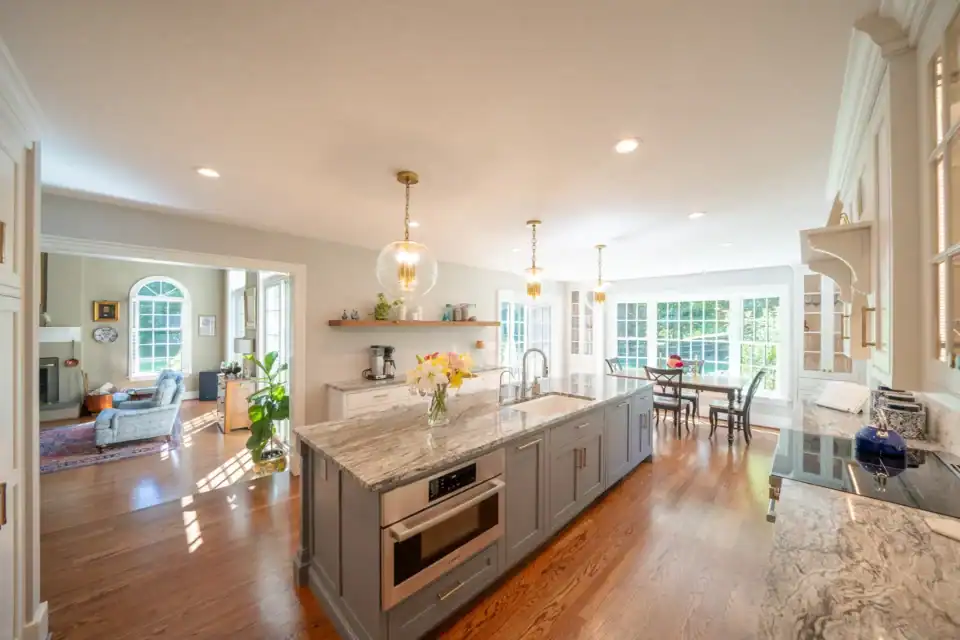
- An open floor plan that does not require numerous turns and long routes to get from one room to another
- Larger bathrooms to accommodate walkers or wheelchairs
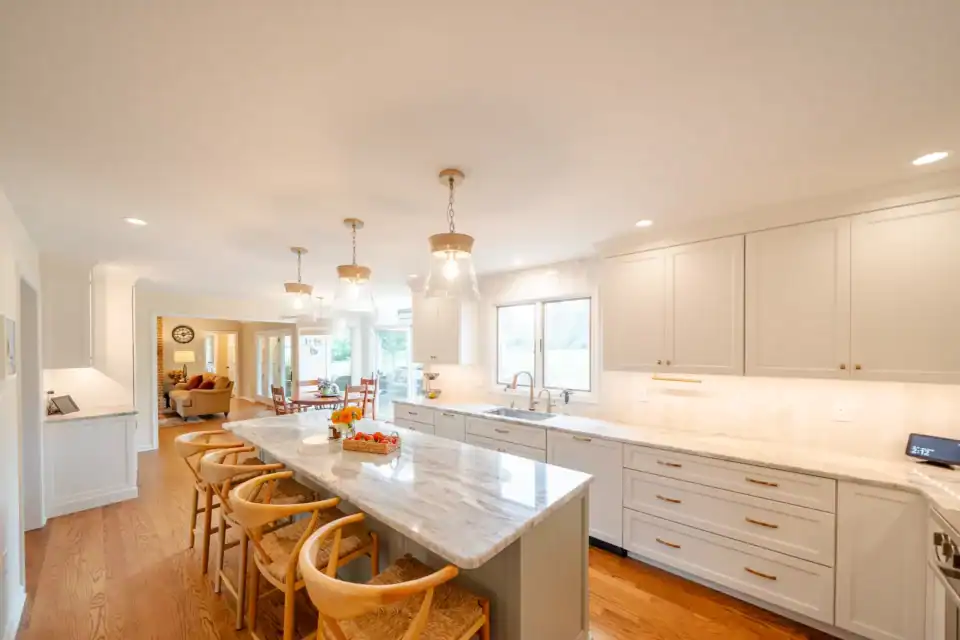
- Increased distance between the kitchen counters and island(s)
Aging In Place Design Ideas for Older Adults Without Structural Changes
So what can you do if you’re not undergoing a major structural project or addition? There is still plenty that can be done during “cosmetic” renovations that will enhance aging in place, even if it’s years down the road. Even if you’re not undergoing a major structural project or addition, incorporating in home care solutions can significantly enhance aging in place.
For younger homeowners, it may be tough to make such considerations now but you’ll be making an important investment in your future and you can do so by making design choices that are aesthetically pleasing and practical for people of all ages and abilities. Here are some stylish, convenient, and practical ideas that can be incorporated into any renovation to provide a big future return:
- Zero-threshold entries and interior doorways
- Hard-surface flooring throughout the home
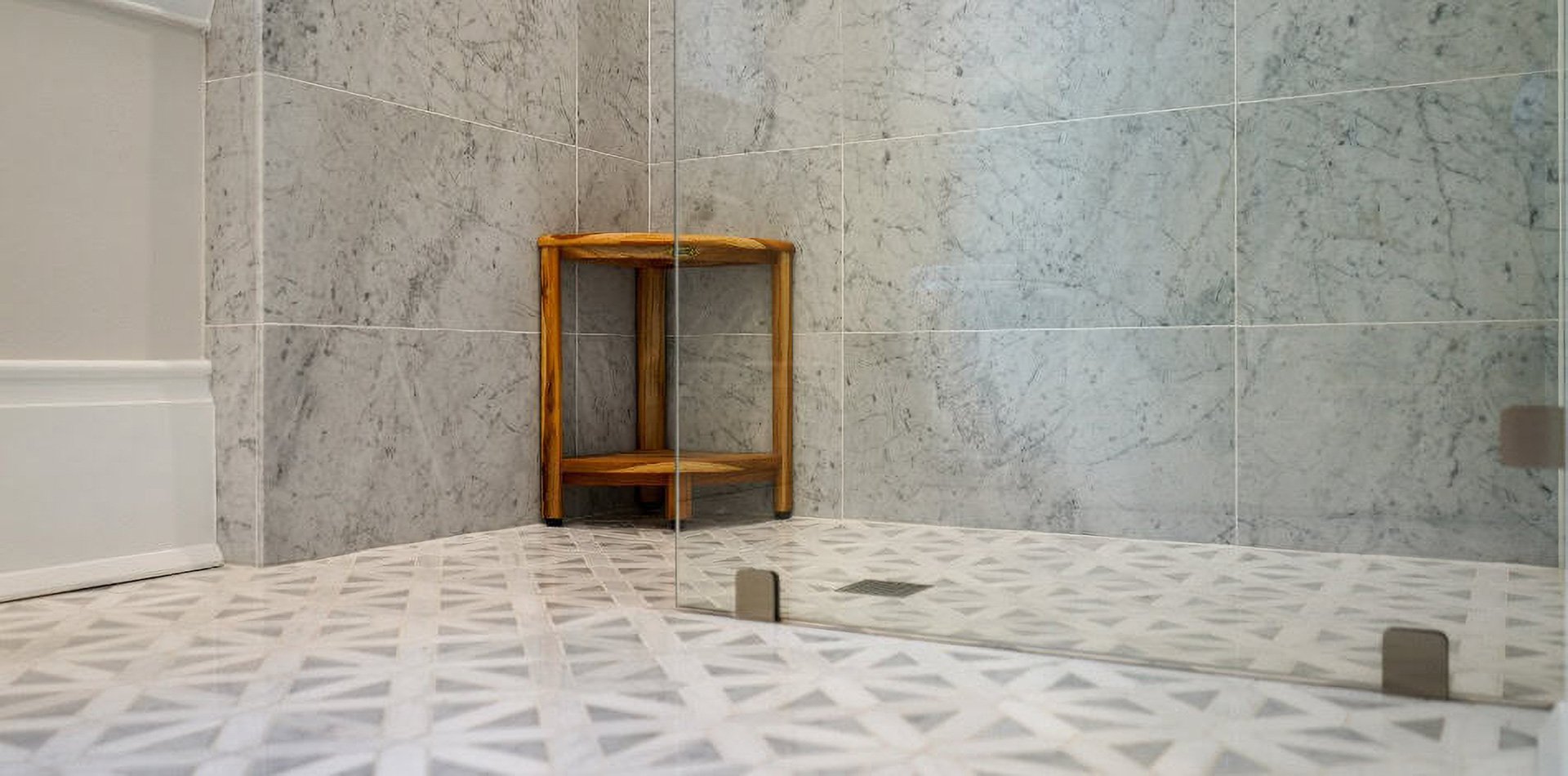
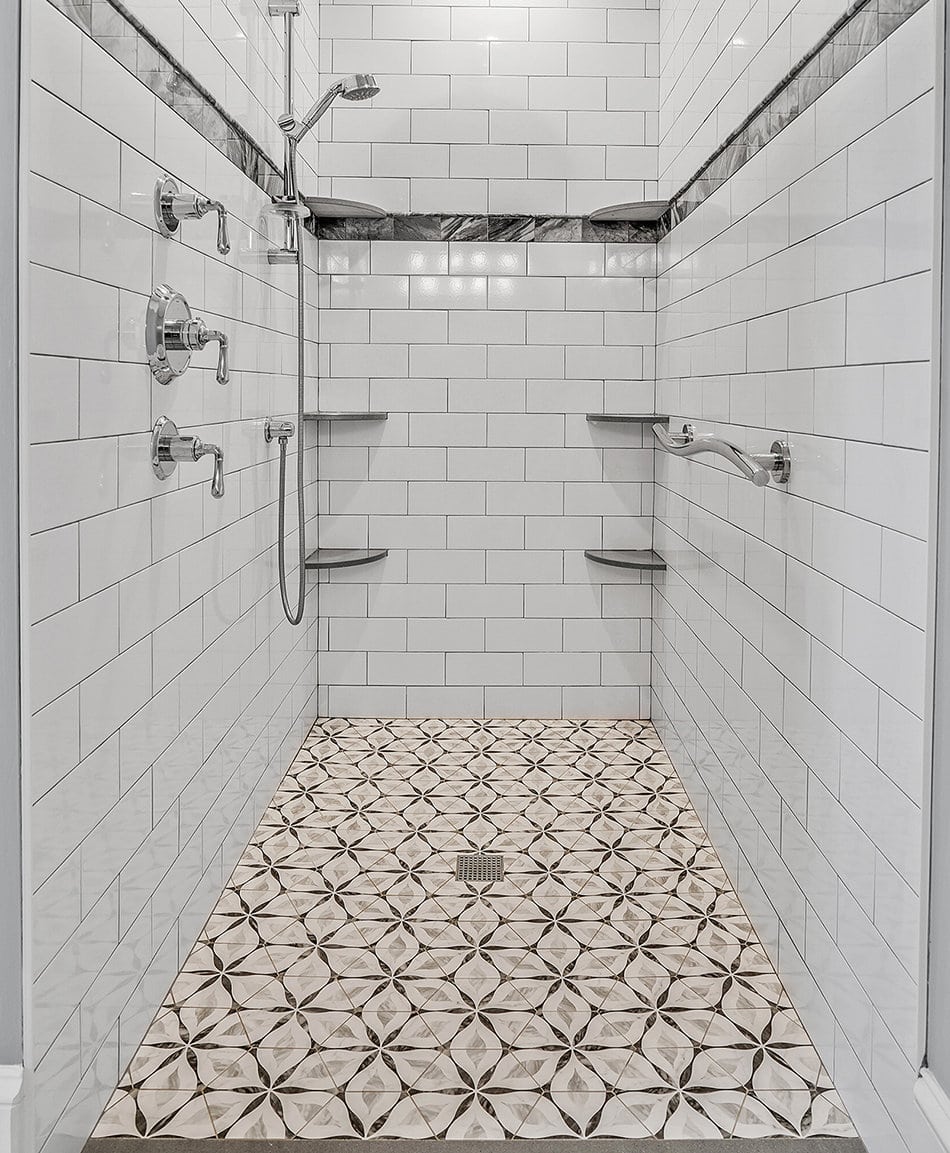
- Curbless showers for easy entry (see below)
- Walk-in showers without doors
- Bench seating within a shower
- Pocket doors for unobstructed pathways
- Lever door handles that are much easier to operate than knobs
- Raised-height toilets
- Roll-out and pull-down cabinet shelving
- Appliance garages with rollout drawers and outlets to eliminate the need to lift small appliances
- Task lighting to improve visibility and create a safer environment for aging eyes
- Lowered light switches and raised electrical outlets
- Lowered windows or taller windows with low sills
Safety and Accessibility Features
Safety and accessibility features are vital components of a home designed for aging in place. Older adults should consider installing grab bars in bathrooms, non-slip flooring throughout the home, and even emergency alert systems to enhance safety. Assessing your home’s accessibility features, such as wheelchair ramps and wide doorways, is also crucial to ensure easy navigation within your space. Additionally, incorporating assistive technology like medication reminders and blood pressure monitors can help older adults manage their health and daily living needs more effectively. These modifications can significantly improve the safety and comfort of the home, allowing older adults to live independently for longer.
Cost and Financing Options
The cost of aging in place can vary widely, depending on the extent of home modifications and the community services required. Older adults can explore various financing options, such as home equity loans and government programs, to help cover these expenses. Working with a geriatric care manager or financial advisor can provide valuable assistance in navigating the financial aspects of aging in place.
Additionally, researching community resources, such as Area Agencies on Aging, can help older adults learn about available services and support. By understanding the financial landscape and available resources, older adults can make informed decisions about their home modifications and care needs.
Read More: Navigating Tariffs and Remodeling: Cost and Smart Strategies
Working with a Contractor
Working with a contractor can be a daunting task, including for older adults who may not be familiar with the process. It’s essential to research and interview potential contractors to ensure they have experience working with older adults and are knowledgeable about aging-in-place and universal design principles. Additionally, older adults should obtain multiple bids and check references before making a final decision. By taking these steps, older adults can find a reliable contractor who will help them create a safe and accessible living environment.
Next Steps
As a design + build firm for home renovations, additions, and custom homes, Hazley Builders can thoughtfully design and build aging in place features that make the most sense for your family and home. Contact us today to discuss your project!