
There’s no shortage of ways to use bathroom tiles to enhance the aesthetics and performance of your bathroom. Tile has impressive characteristics, including moisture resistance, that make it well-suited to bathroom floors, walls, and showers. Tile also comes in diverse styles, so you can almost always find a tile option that matches your design sensibilities.
In this post, I’ll review eight examples of how we’ve used tile in bathroom remodels. None of these is meant to be a prescription for your home. Instead, I hope these ideas spur your creativity and help you develop a vision for your bathroom remodel.
Bathroom Tile Example #1: Smooth and Subtle
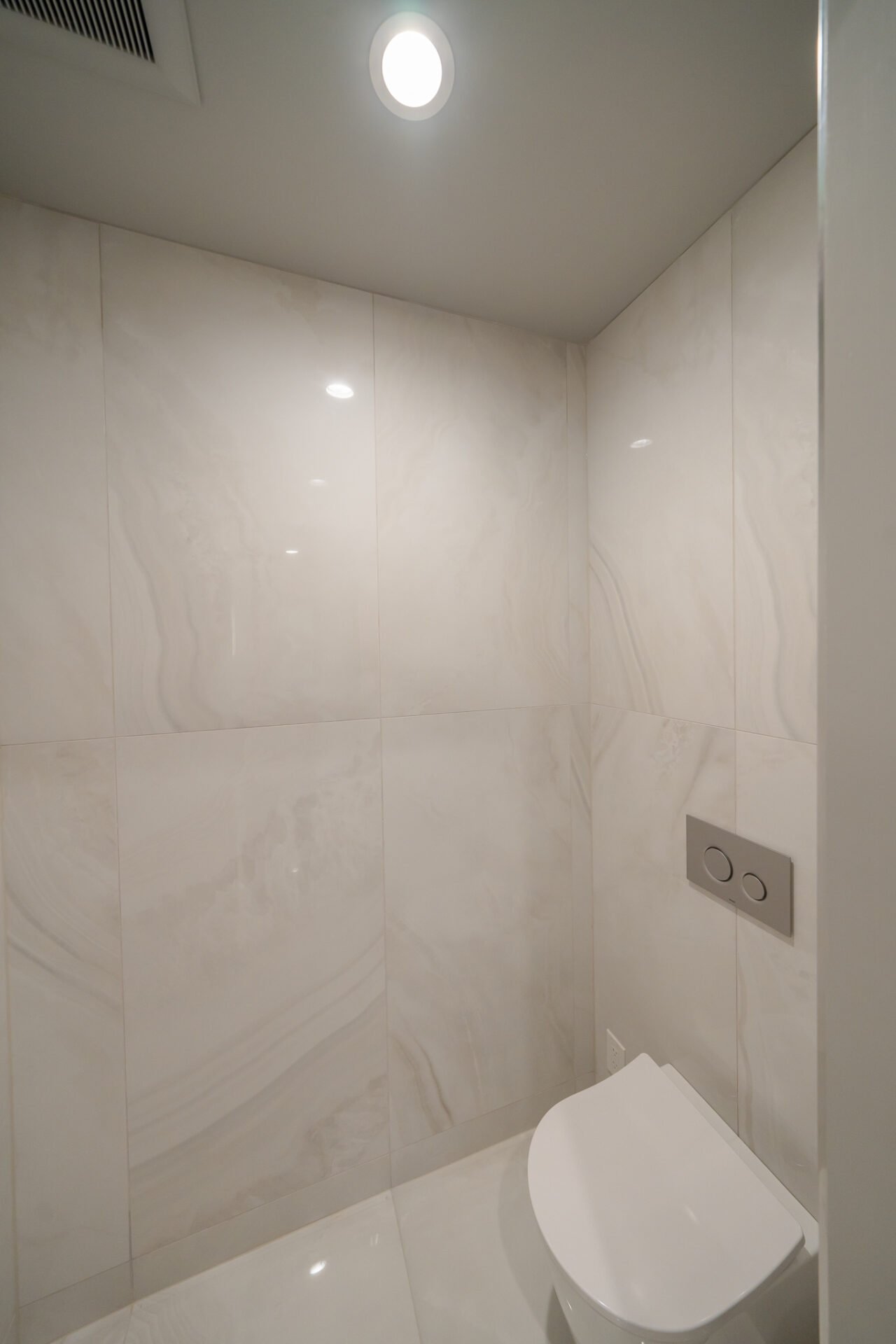
In this remodeling project, we used large-format, vertical tiles with a light color and subtle pattern. The larger vertical tiles give the WC a greater height and space.
The tiles themselves are smooth and elegant with minimal grouting to create a more seamless look. Overall, these tiles promote a classic style while still showing personality and an eye to design.
Bathroom Tile Example #2: Contemporary Texture
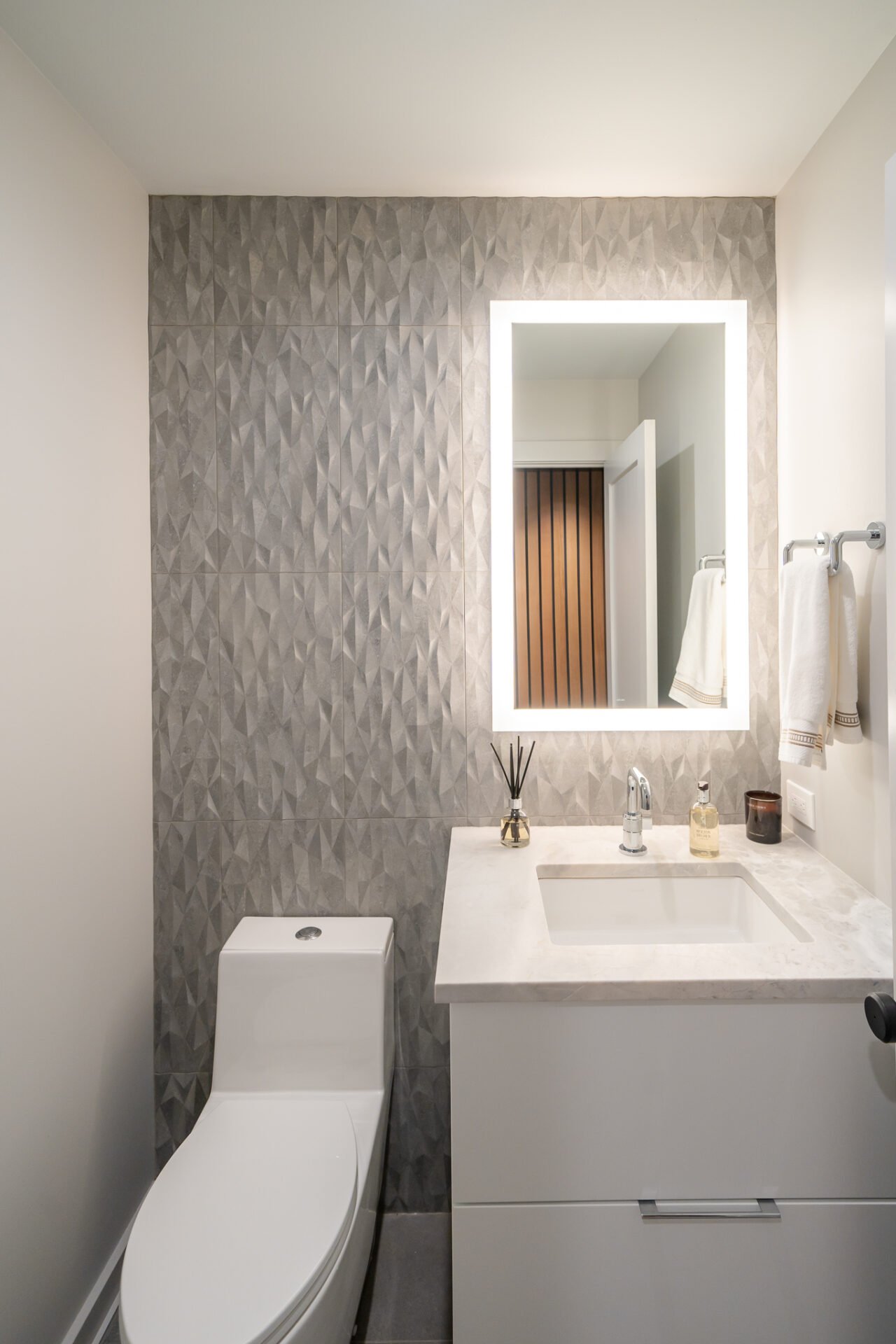
This example shows how the right tiles can make the most of a small space, like a powder room. With less room to work with, you can use bolder design choices to make a statement in a hall bathroom or powder room.
In this case, the wall tiles have a metallic look that adds visual interest and texture to the wall behind the toilet and vanity. All of the other surfaces are smooth, which draws more attention to the tile and prevents the design from feeling overwhelming. The lighted mirror frame adds brightness and a touch of shadow to these non-traditional, contemporary bathroom tiles.
Bathroom Tile Example #3: Shades of Blue
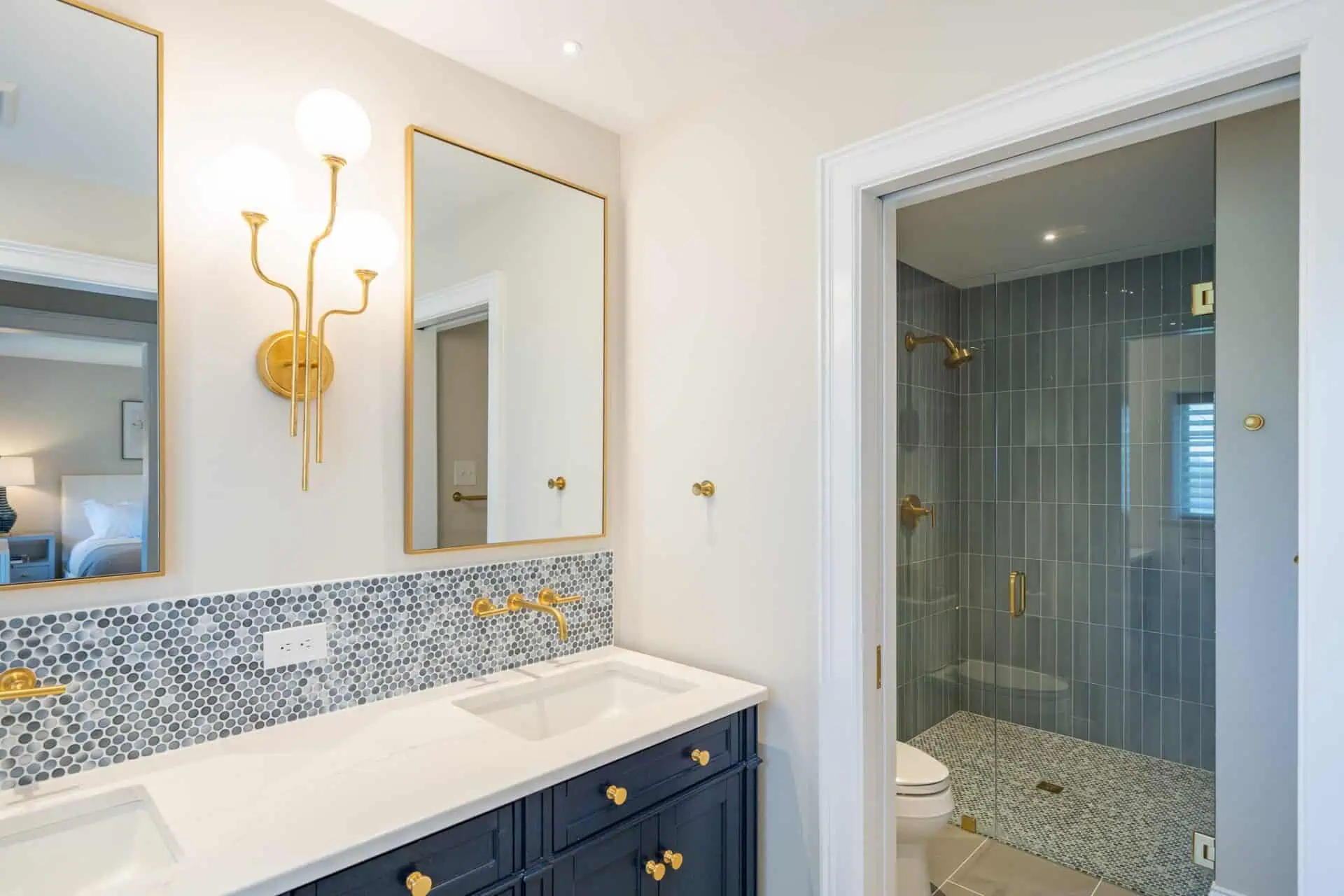
In this remodel, we used several types of bathroom tiles with different styles and shades of blue to create a cohesive and compelling look and feel.
For the vanity backsplash, honeycomb-style tiles have various shades of blue as well as ombre, or gradation of color within individual tiles. This attracts the eye and gives the appearance of texture even though the tile is smooth. This backsplash tile matches the shower floor, creating continuity between the vanity room and the separate shower room.
For the shower walls, the vertical tiles also have a gradient color with various blue tones. The concept of subway tile is modified here with a more angular, vertical tile that gives height to the shower, making it feel more expansive and spa-like.
Bathroom Tile Example #4: A Creative Look with White Tile
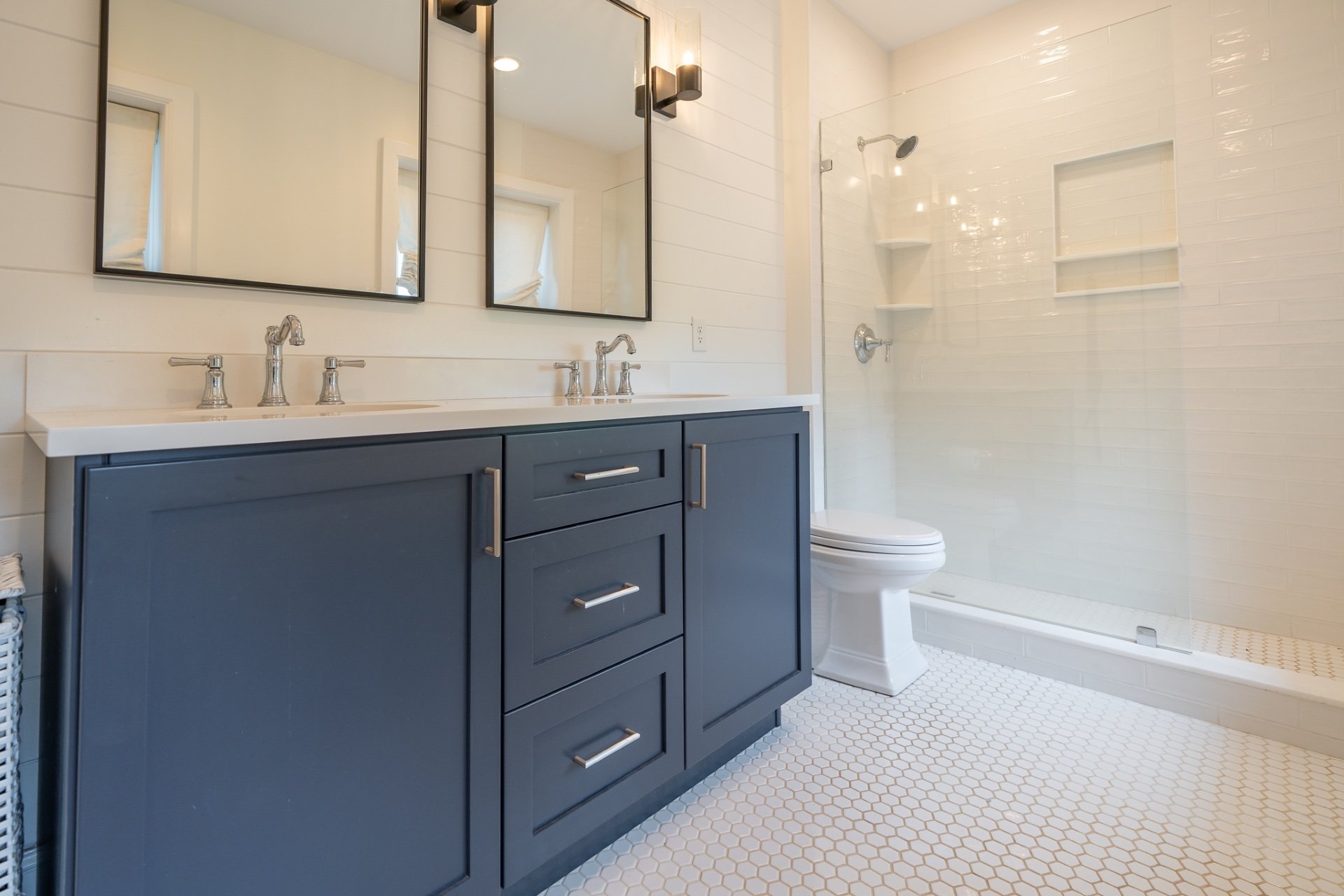
For this remodel, we used different tiles, one for the shower walls and another for the floor of the bathroom and shower.
The shower has long, horizontal wall tiles that resemble white painted brick. White grout lines are barely visible and give only a light sense of texture to the wall.
This example shows off an additional benefit of shower wall tiles, which is the ability to put in a niche and corner shelves to hold soap, shampoo, conditioner, and any other bottles or accessories you need.
For the floor, the tile has a honeycomb arrangement. All of the tiles are the same color, but they use contrasting grout to break up the plain white look. The dark blue vanity adds a pop of color relative to the white tiles.
Bathroom Tile Example #5: Clever Contrast
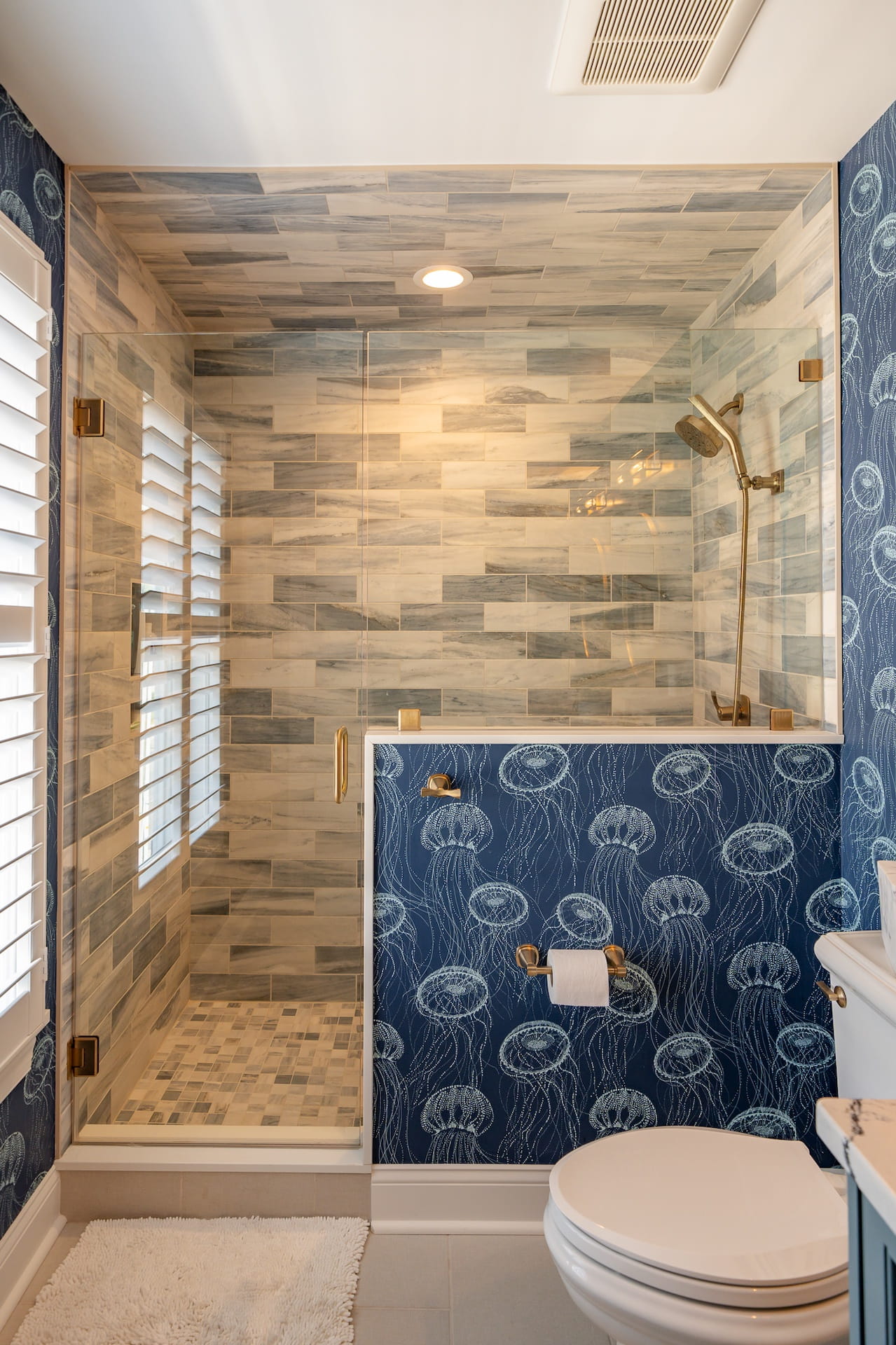
Our client really wanted to make a statement with this bathroom remodel, which we achieved through the strategic use of contrast throughout the bathroom.
Inside the shower, the wall and ceiling are both tiled, making it feel more enclosed. The tile has a wood-like look, which creates a cozy feeling, almost like being in a contemporary sauna. For the shower floor, we used a different style of tile but with similar color tones as the tile on the walls and ceiling.
A pony wall helps physically separate the shower and features a unique jellyfish wallpaper that serves as a unique contrast to the shower tiles.
Bathroom Tile Example #6: Complex Patterns
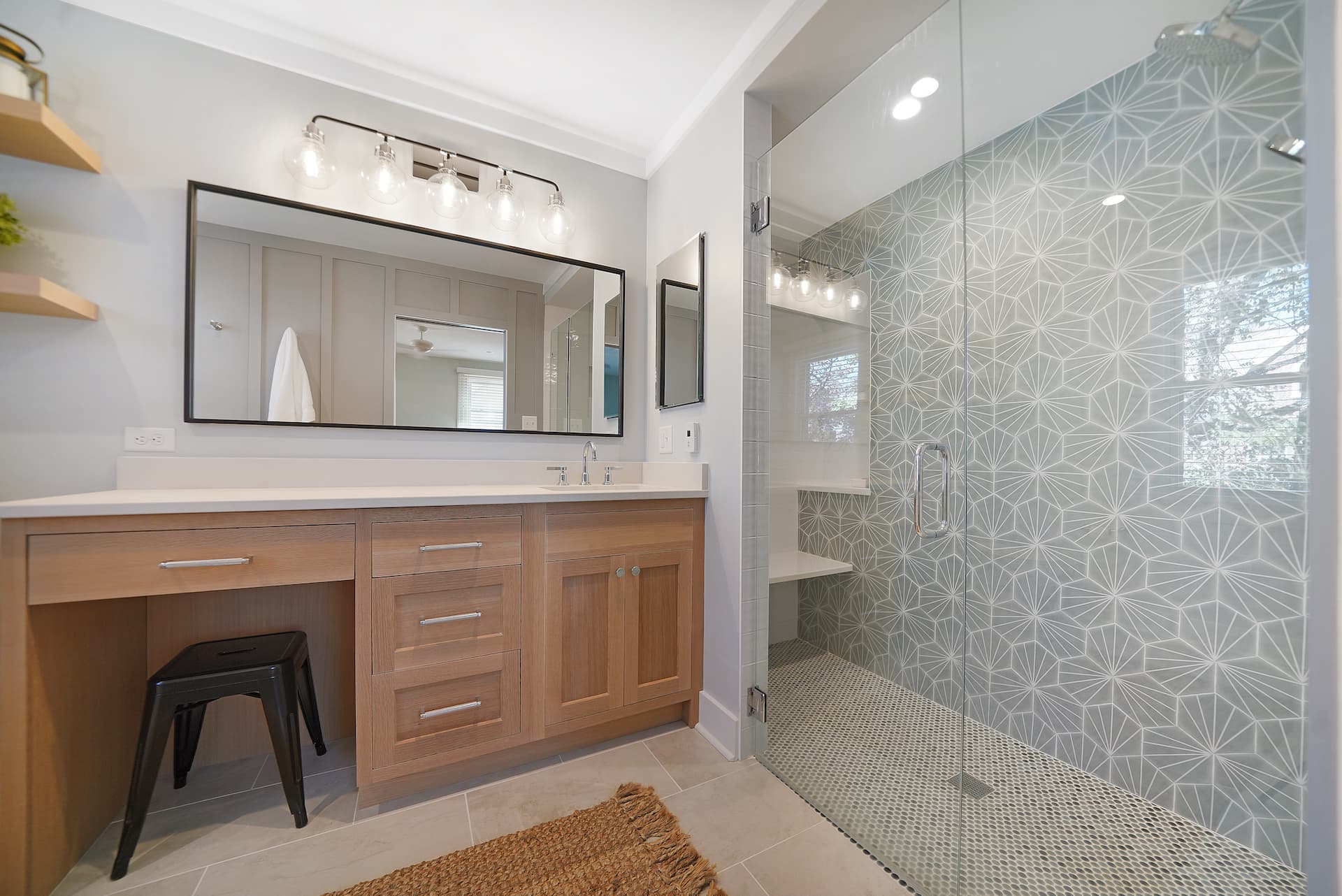
This example from our portfolio shows how shower tile can be used to create wallpaper-like patterns, allowing you to get the performance of tile with the stylistic flexibility of wallpaper.
The floor has a multi-colored, honeycomb-style tile with a range of color tones that complement the gray and white shower walls. The wood in the vanity helps to balance out the gray tones and gives some inviting warmth to the overall design.
Bathroom Tile Example #7: Elegant Vertical Tile
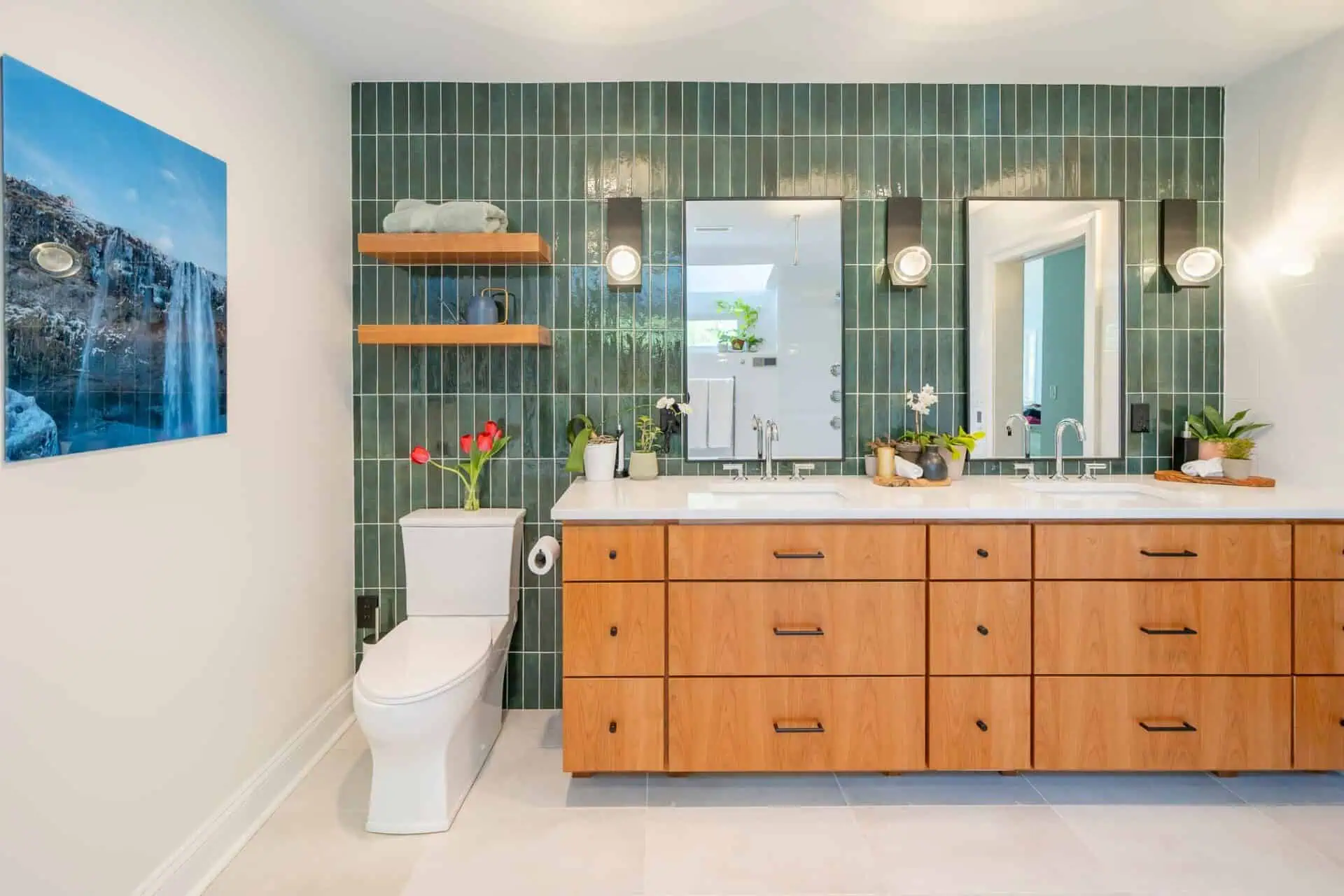
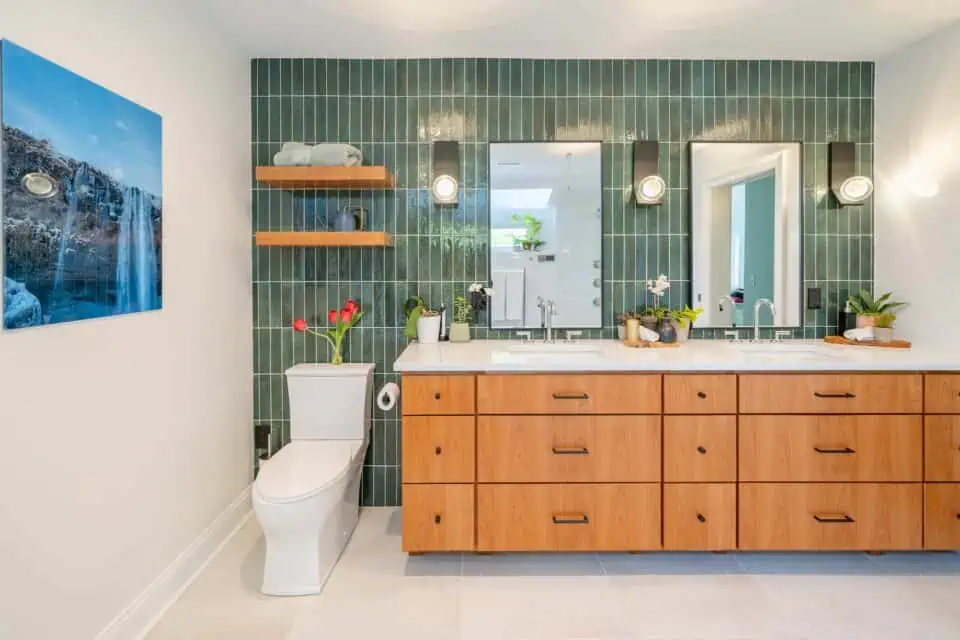
For this bathroom makeover, we tiled one wall with vertical tile that is a jewel-toned green. There is subtle color variation within the tiles, and thicker white grout lines help draw out the deep forest green.
This color has a natural feel that is further highlighted by the use of wood for the vanity and shelving. Plants and landscape art also add to the natural design sense of this bathroom.
Bathroom Tile Example #8: Space Optimization
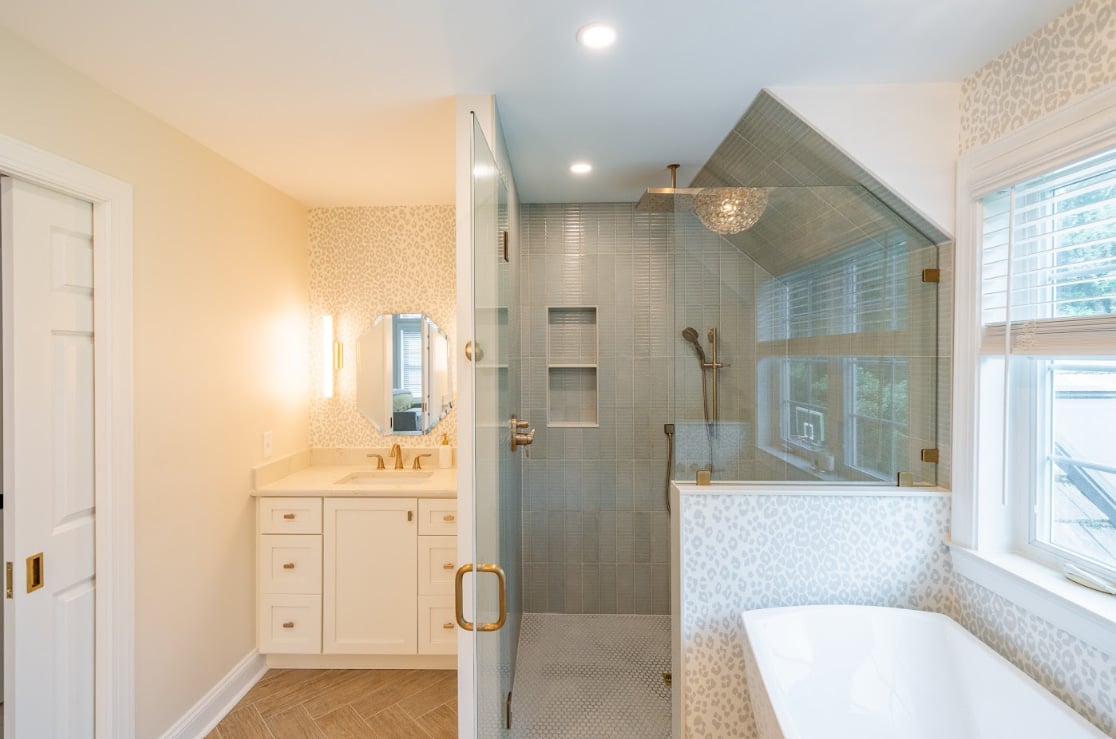
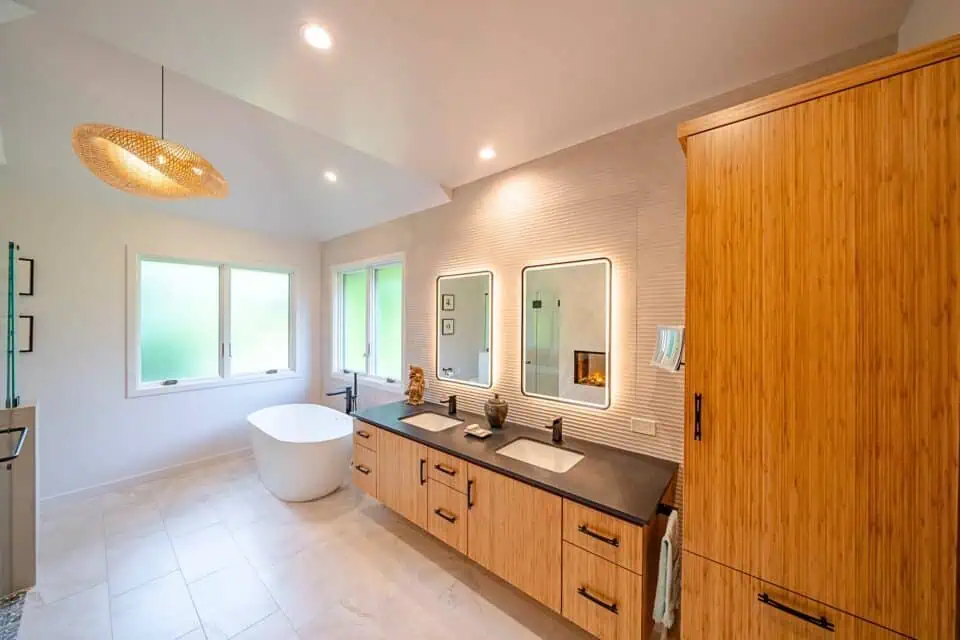
For some bathroom upgrades, you have to make the most of a restricted footprint. In this case, we wanted to give a fresh look to this dormer-style space with a slanted roof.
In the shower, we used tile with a subtle ribbed texture and a vertical orientation of the tile to make the shower feel less cramped. We put tile on the slanted surface, which helps create visual unity and provides added protection against moisture.
In the vanity area, wood tile flooring offers a sharp counterpoint, providing a more homey feel without the susceptibility to moisture damage associated with a real hardwood floor.
Ways to Use Bathroom Tiles
Bathroom tiles are extremely versatile. Because they come in all types of sizes, shapes, colors, and textures, they can be installed in different parts of your bathroom.
Bathroom Floor Tiles
Tile can be a great choice for your bathroom floor. The best bathroom floor tiles are resistant to moisture damage, so you don’t have to worry about them getting wet. They’re also easy to clean, which is a huge plus in bathrooms.
Shower Floor and Shower Wall Tiles
Tile is one of the most popular materials in showers. Whether for the walls, floor, or ceiling, shower tiles offer excellent performance and a wide selection of design options. Tile installation can include putting in a niche or other convenient storage space.
In your shower, you can choose matching tiles for each surface, or you can create contrast by opting for a different pattern on the floor.
Wall and Backsplash Tiles
Tile can give a compelling look to bathroom walls. You can tile the entire bathroom or selectively tile specific walls or areas. For example, we like to tile a vanity backsplash or the entire wall behind the vanity. If you have a tub in your bathroom, you can use tile for a stylish bathtub surround.
Choosing Your Bathroom Tile
There is no universally accepted best bathroom tile. Instead, the right choice of tile depends on where exactly you’re installing it and the type of look you’re going for. When selecting bathroom tiles, some of the important considerations include:
- The tile material, such as glass tile, porcelain tile, or ceramic tile
- The size of each individual tile
- The shape of each tile
- Whether you want the tile to have a solid color, a gradient color, or a specific pattern
- The quality and durability of the tile
- The thickness and color of the grout you plan to use
Finding a Partner for Your Bathroom Remodel
We have over 25 years of experience doing high-quality remodels throughout the West Chester, Pennsylvania area. Our skilled design team, led by a certified architect, is committed to turning your remodeling ideas into realistic, actionable plans. And our production team is efficient and skilled at bringing those design plans to life.
If you’re considering a bathroom remodel, we invite you to learn more about our team and design-build process. Or simply give us a call, and we can set up a time to discuss your remodeling needs.