
Among all the elements of a kitchen remodel, including flooring, cabinetry, countertops, and appliances, it’s easy to overlook the kitchen backsplash. But despite being a smaller space, a backsplash is a top kitchen trend and can have a huge impact on the quality of your remodel. It also plays a practical role in defending your walls against water damage and kitchen spills.
Most kitchens have a tile backsplash. Tile provides the performance you need in a kitchen environment, and it also comes in many sizes, colors, materials, and patterns. This enables you to choose kitchen backsplash tile that complements all of the other components of your kitchen’s design.
In this post, I’ll go over 10 “rules” for kitchen backsplash tiles while also explaining when you can deviate from them. I’ll also share examples from our portfolio that I hope will help you formulate backsplash ideas for your kitchen.
Rule #1: Backsplash Tile Should Be Practical and Stylish
When choosing backsplash tiles, you don’t need to compromise on performance or aesthetics.
The most popular tile materials, including porcelain tiles and subway tiles, remain durable when exposed to heat and moisture. They are also easy to clean and maintain. Materials like marble can add an elegant touch to your kitchen design. You should always choose a backsplash material with these performance characteristics to avoid headaches in both the short and long term.
At the same time, a great thing about tile is that you have tons of style choices, allowing you to find an option that suits your kitchen and your interior design sensibilities.
For these reasons, you shouldn’t choose between functionality and looks for your kitchen backsplash tile. You can and should have both.
Rule #2: Tile Should Stop at the Bottom of Your Cabinets
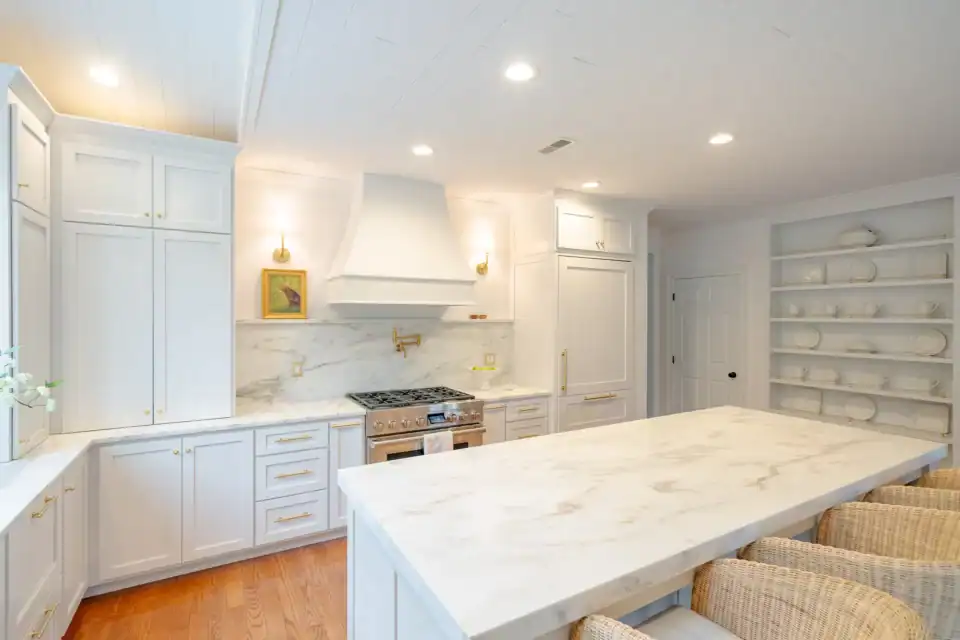
Typically, the backsplash fills an area between the lower and upper cabinetry. For the most cohesive look, the general rule is that your backsplash should line up with the bottom part of the upper cabinets, creating clean lines that enhance the overall aesthetic.
Vertically, this means that there are no backsplash tiles behind the cabinets. Horizontally, it means that the cabinet edge is flush with the edge of the backsplash. If the cabinets don’t stretch across an entire wall, neither does the backsplash.
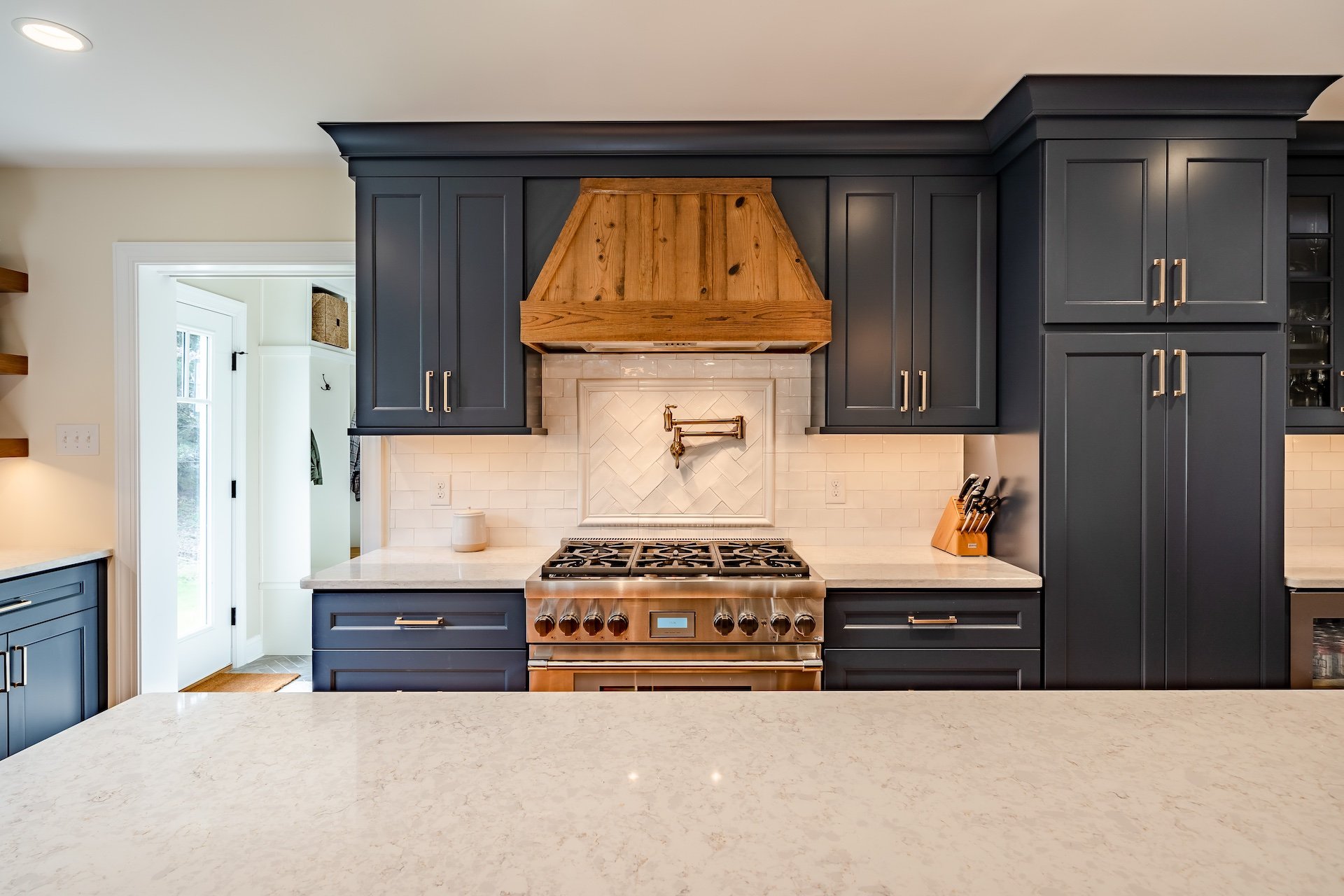
However, this rule doesn’t apply in all situations. Some kitchens may not have extensive upper cabinetry, in which case the backsplash tiles can line up with other elements, such as the range hood, or they can extend to the ceiling.
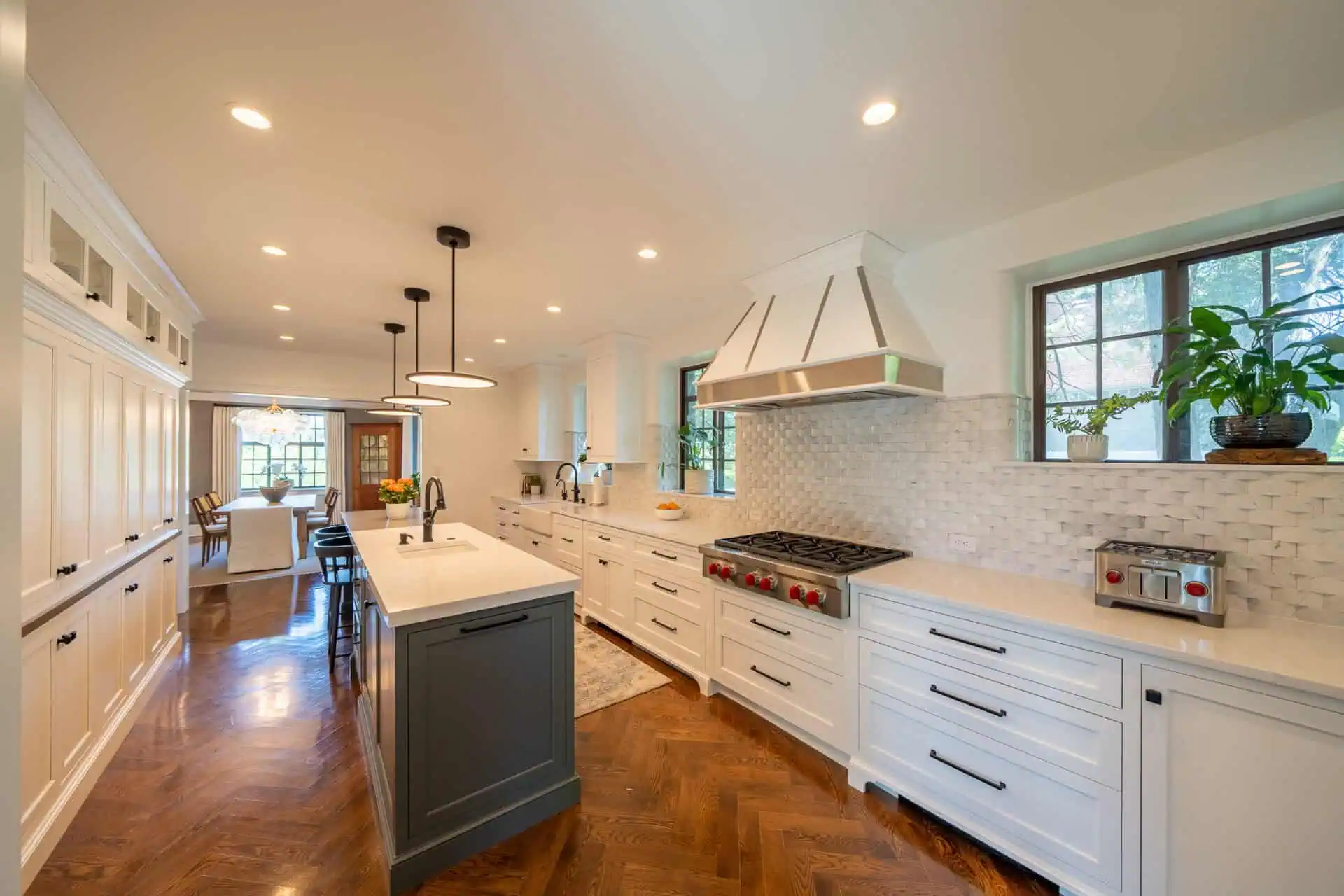
Rule #3: Kitchen Backsplash Tiles Should Be Coordinated with Your Lighting
When choosing a style for your kitchen backsplash tiles, you want to consider their positioning relative to different light fixtures.
The backsplash sits in a crowded visual field, set back on the wall and under a range hood or cabinets. In many kitchens, that puts the backsplash tiles at least partially in shadow. On the other hand, under-cabinet lighting can directly illuminate a backsplash.
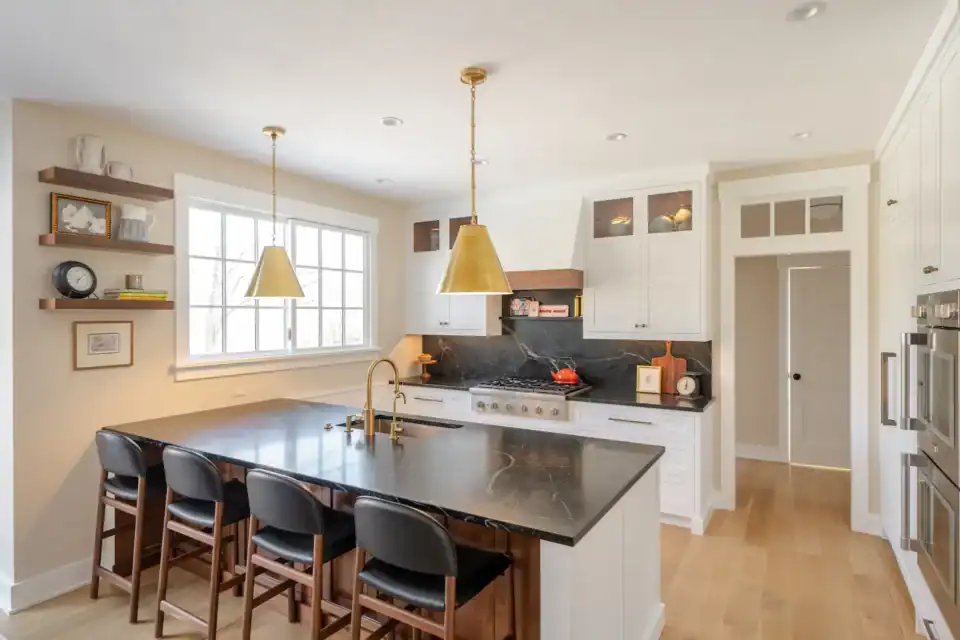
Dark tiles, especially those with a matte finish, may look even darker when nestled into a backsplash that is draped in shadow. Lighter and glossier tiles, including subway tiles, may work better if you want to create a brighter feel.
For all backsplashes, the goal should be to properly coordinate the lighting with the color and style of the tile for the best overall appearance.

Rule #4: Tile Is the Only Material That Should Be Used for a Backsplash
Thanks to its performance and style, tile is the preferred choice for a kitchen backsplash. It’s also a great option because of the wide selection of tiles available.
The most common types of tile used in kitchens include porcelain tiles, ceramic tiles (including subway tile), glass tiles, marble tiles, and natural stone tiles, with many homeowners preferring high quality tiles for both durability and design:
- Porcelain tiles
- Ceramic tiles (including subway tile)
- Glass tiles
- Marble tiles
- Natural stone tiles
That said, there are some exceptions to this rule. In some kitchens, an exposed-brick backsplash can look great. Some wallpaper is engineered for use in a kitchen, and certain materials, like natural or engineered stone, may be used in slab form instead of tile.
Rule #5: Kitchen Backsplash Tiles Should be Professionally Installed
For tile to look good and resist heat and moisture, it needs to be properly installed. Professionally installed tiles can stand up well against moisture and other kitchen conditions. If the tile is not lined up, grouted, and sealed correctly, it may be prone to shifting or cracking, especially if it’s a material like glass tile.
A kitchen backsplash also involves unique dimensions and space constraints, elevating the importance of working with an experienced and dependable installer.
Rule #6: Tile Size Matters
One of the benefits of tile is that it comes in all shapes and sizes. Although almost any size can work, it’s important that you pick a tile size that suits your sense of style.
Large-format tiles can work in some kitchens, but we usually find that their size is a better match for bathrooms and showers. Medium-sized rectangular tiles often work great, which is why subway tiles are a popular choice.
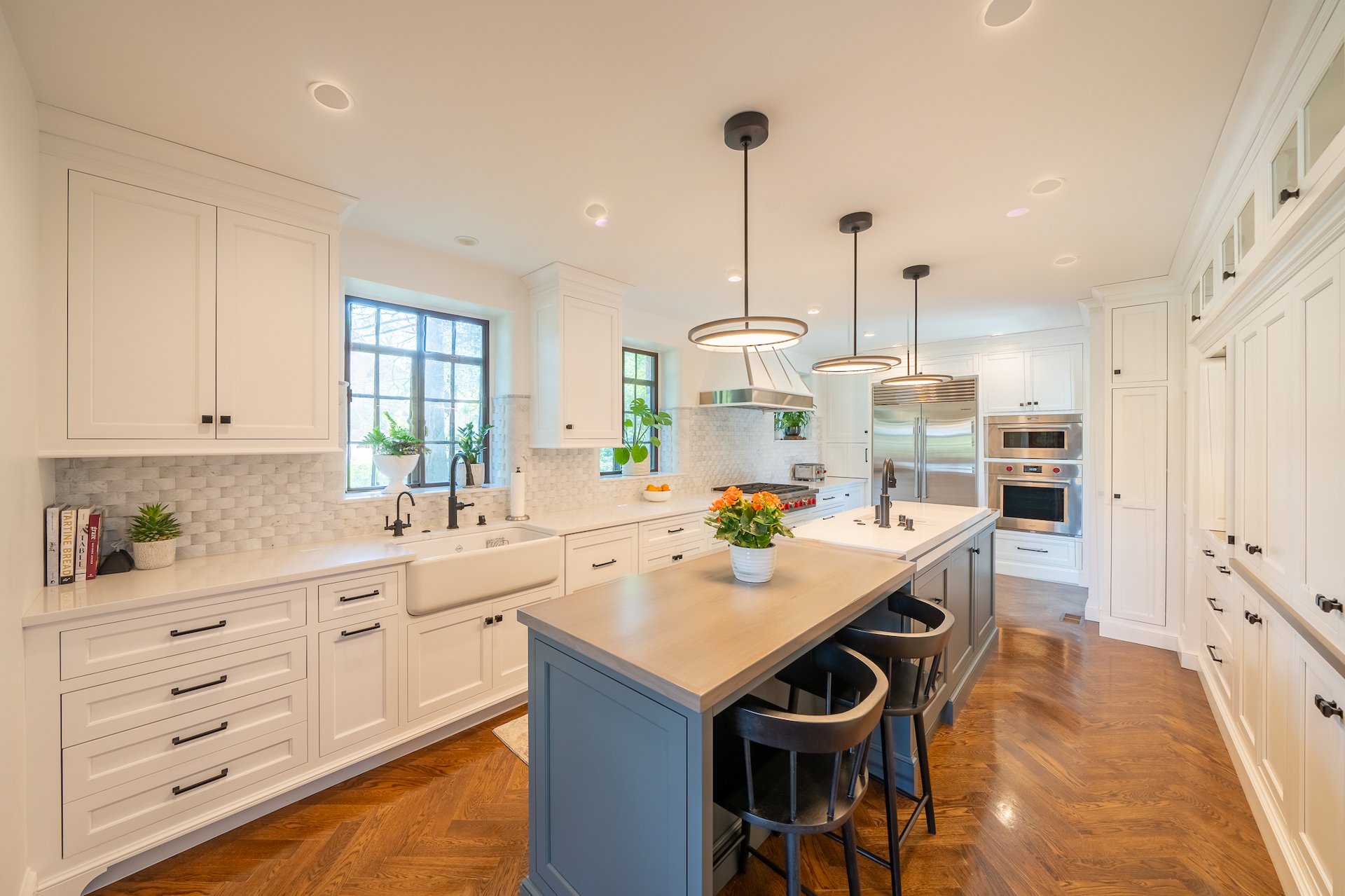
For some spaces, small tiles can be an eye-catching option. Small mosaic tiles or hexagonal tiles in a honeycomb pattern can create significant visual interest and make a kitchen feel more vibrant. For those who enjoy intricate mosaics, backsplash designs can become true works of art that add both texture and elegance to the kitchen.
Rule #7: Kitchen Backsplash Tiles Should Have a Trendy Pattern
This rule is probably the most controversial and one that, I admit, often has good reason to be broken.
For many kitchen remodels, our clients want their backsplash to make a statement. One of the best ways to do that in a compact space is to install backsplash tiles with a unique or trendy pattern. For instance, herringbone or chevron patterns can give a sense of motion and activity to otherwise staid walls.
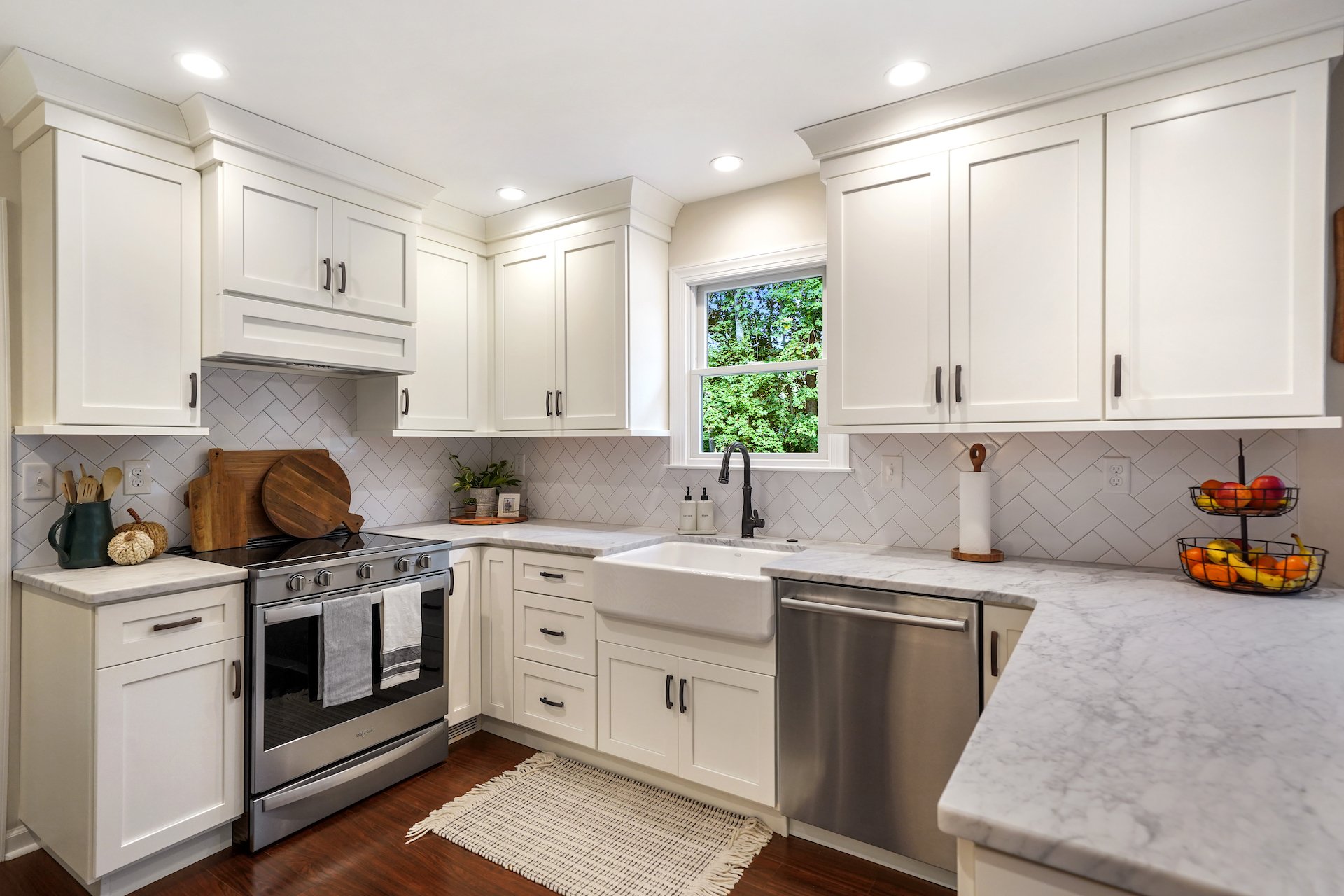
However, for some remodels, a trendy pattern looks out of place. Not all homeowners want the backsplash to be a focal point. They may prefer styles and patterns that lean more toward classic and elegant than trendy and contemporary.
Rule #8: Backsplash Tile Should Not Be Porous, Uneven, or Prone to Heat Damage
The reason for this rule should be pretty clear. Given a kitchen’s demands for cooking and cleaning, kitchen backsplash tiles need to hold up in very different conditions than backsplash tiles for a bathroom vanity. Putting porous, uneven, or heat-sensitive tiles in a kitchen backsplash is just asking for trouble.
However, there can be some rare exceptions. For example, some kitchens may have a bar or breakfast nook with a backsplash that doesn’t encounter as much warmth or moisture. In those areas, you may be able to choose a tile with more style and less rugged performance.
Rule #9: Backsplash Tile Should Suit the Overall Interior Design
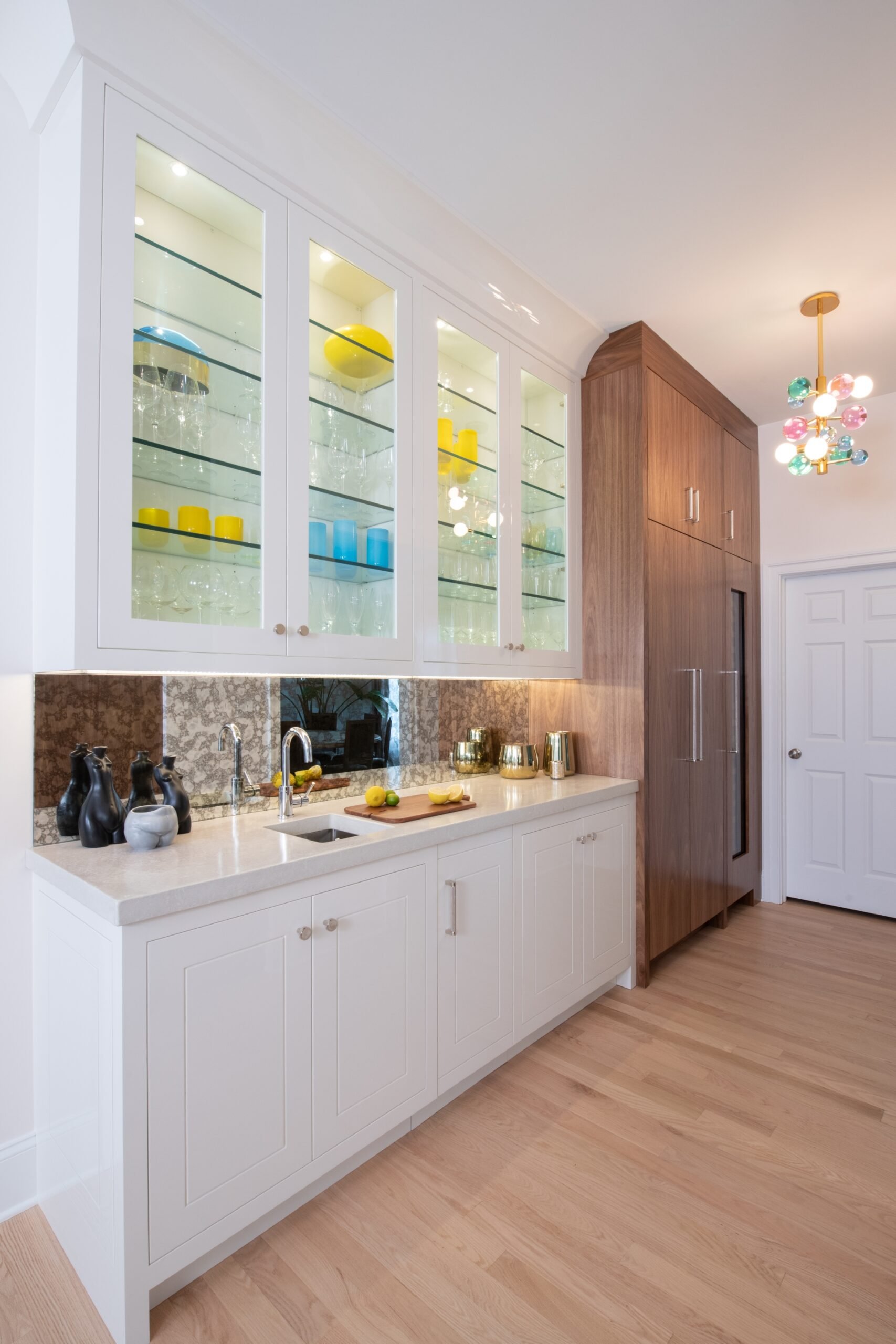
Aesthetically speaking, your kitchen backsplash tiles are never going to be seen in isolation. That’s why their color and pattern should be in harmony with your countertops, cabinetry, and appliances.
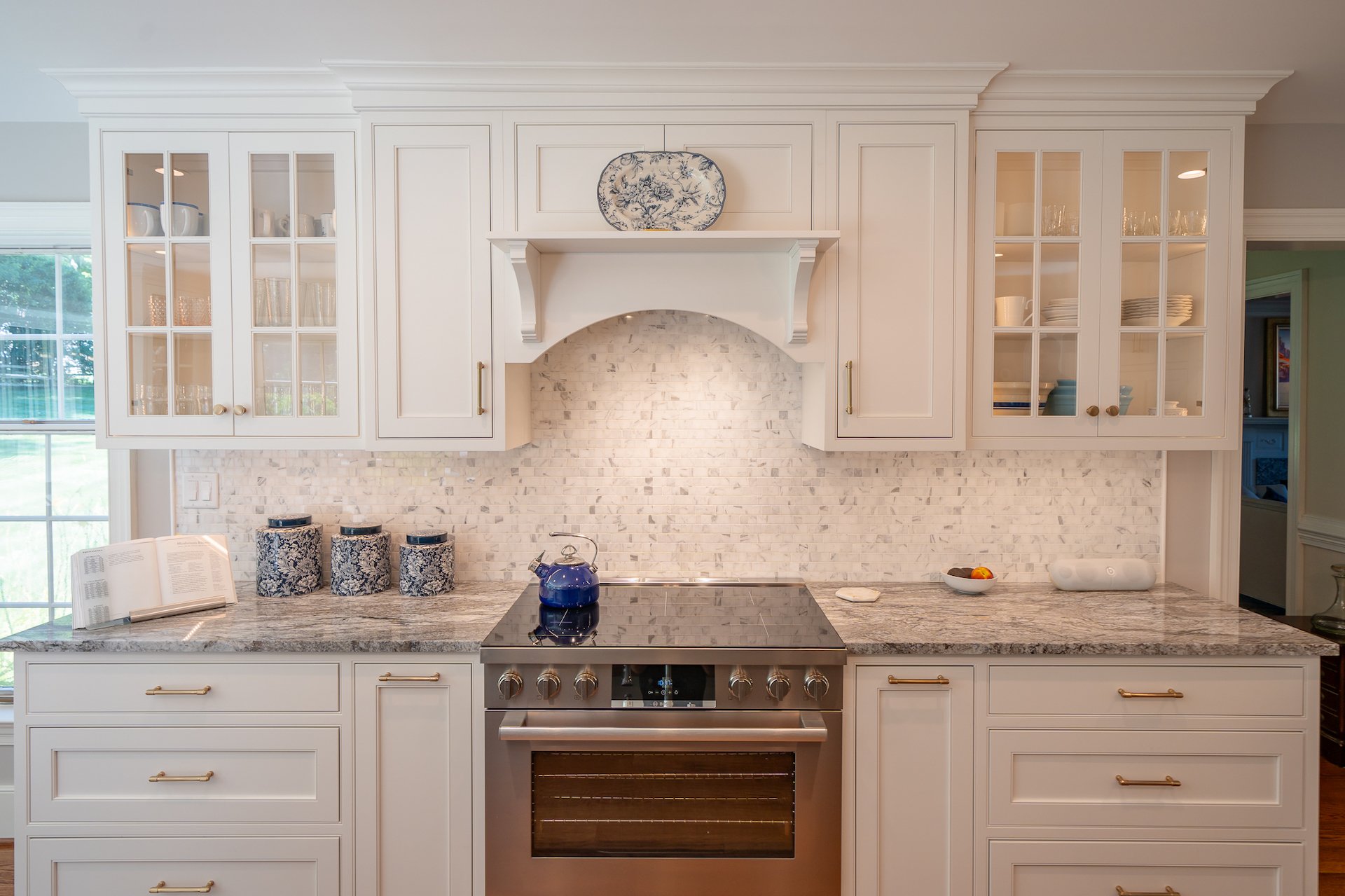
While this rule may make it sound like everything needs to match or have the exact same color palette, in practice, you have a lot more flexibility. Some homeowners like to have vivid contrast or pops of color. In these cases, a contrasting backsplash still fits within the holistic design vision for the kitchen.
Rule #10: Grout Is Important, Too
Grout is what holds your backsplash together, both literally and figuratively. High-quality grouting enhances the performance of your tile and also impacts its visual appearance. Maintaining the backsplash is also simple; often, a quick wipe with a damp cloth is enough to keep ceramic tiles or glass surfaces looking spotless.
When selecting your tile, you’ll want to think about the thickness and color of the grout. If you want contrast, you can opt for thicker grout with a distinct color. Thinner grout lines with a matching color are better for a seamless look. Some homeowners opt for gray, beige, or other neutral tones as an easy way to match grout with different tile colors, shapes, and textures.
Customizing a Design for Your Kitchen Remodel
There’s no perfect backsplash tile that’s best for every kitchen. Instead, you need a design that is tailored to your needs and your space. We offer an extensive collection of backsplash materials that covers the full range of styles, from modern minimalism to timeless classics, and our team provides expert advice to help you choose what works best. That might mean choosing a design that’s a best seller, or it may mean forging your unique flair and sense of style.
Our experienced designers love working with homeowners to plan out the perfect kitchen remodel, including backsplash tiles, and guide them toward a curated collection that ensures a perfect fit for their space. As a design-build firm, we also manage tile installation and every step of the construction process. From day one, this has allowed everyone on our team to collaborate to achieve the best results.
We’ve been serving the West Chester, PA, area for more than three decades and would love to learn more about the next project you’re planning. Get in touch with us directly or keep reading to learn about our process, our team, and our portfolio.