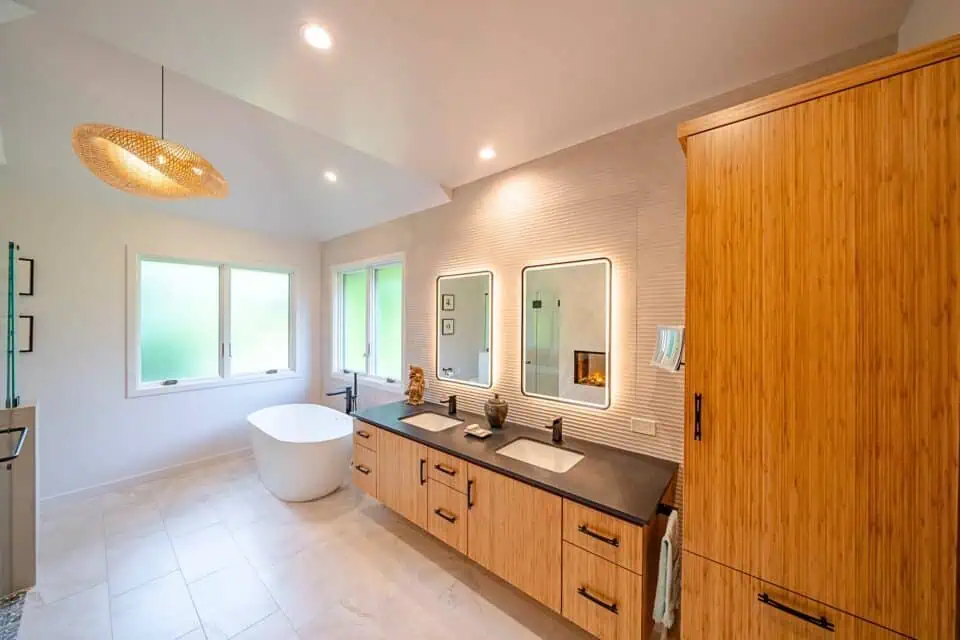


For years, luxury bathrooms trended toward bright, sleek, and polished. After all, most spas have a modern feel, and homeowners largely sought to incorporate that vibe into their bathrooms at home. But the tides are starting to turn, and wood vanities are quietly reclaiming a foothold in high-end bathroom remodels.
While they don’t offer the shiny gleam of other materials, wood vanities provide warmth, individuality, and longevity. They can also foster a sense of either elegant or rustic tranquility, helping homeowners achieve a calm and quiet escape.
In this post, I’ll cover what you should know about wood vanities, including their benefits, the types you can choose from, and other practical details that can help you make the most of your bathroom remodeling project.
Benefits of Wood Vanities in High-End Bathroom Design
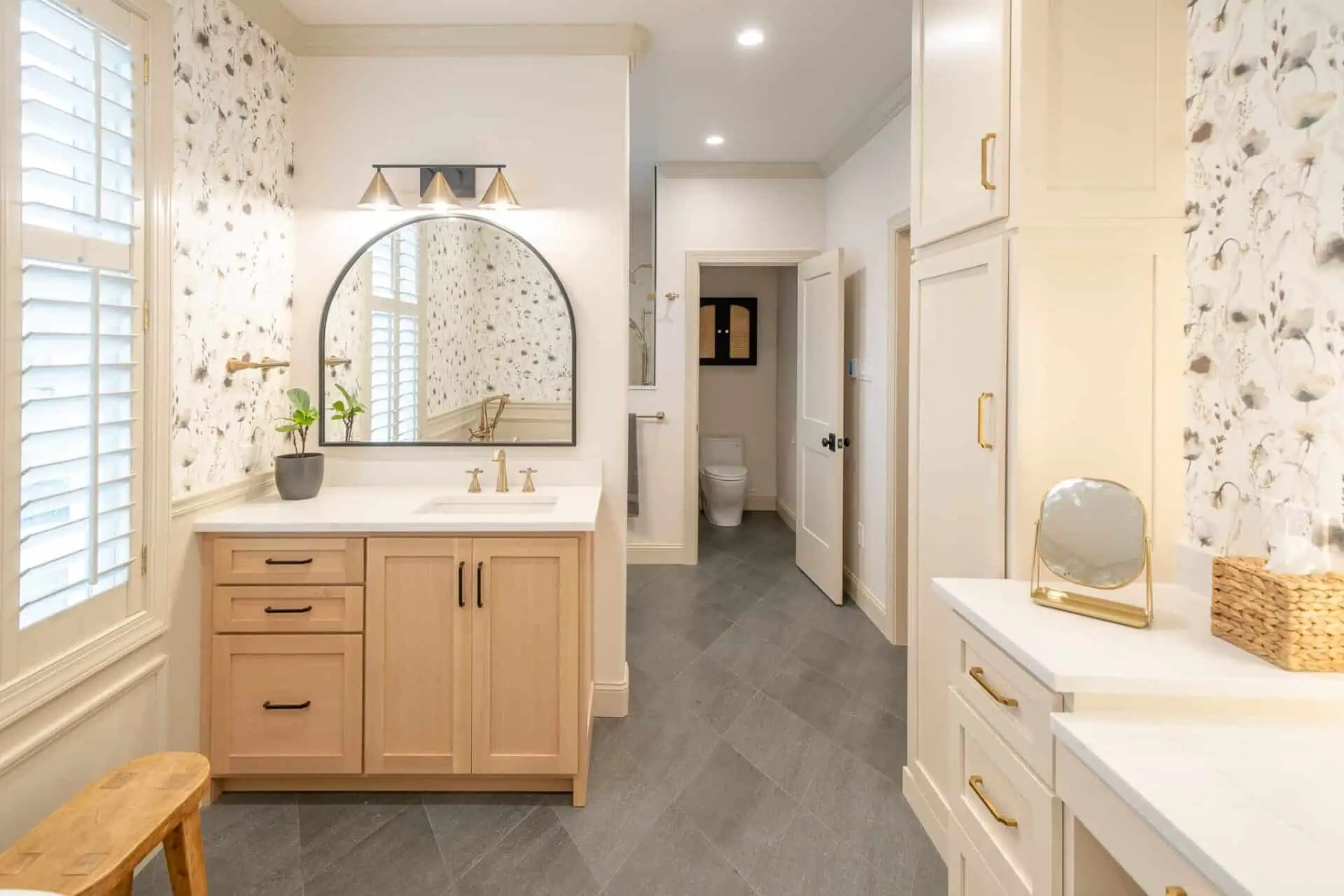
Wood has a classic appeal. Though not ideal for every space, its natural look and textured grain cultivate a sense of warmth and timelessness. In luxury remodels, it offers a number of additional benefits.
- Customization: A made-to-order wood vanity can be built to the exact dimensions, style, and needs of your bathroom. With expert craftsmanship, a wood vanity can be outfitted with specific drawer layouts, integrated hardware, and/or niches that suit how you actually plan to use the vanity. Things like the stain and grain pattern can also be matched to your preferences.
- Patina: Unlike materials that appear damaged as they age, wood evolves. It can develop a patina that enhances its visual appeal rather than looking worn down.
- Long-term value: A well-built wood vanity outlasts trends and often outlasts the bathroom itself. It can be refinished, restained, or refit with new hardware, allowing you to breathe fresh life into a wood vanity if your design preferences change over time.
- Visual center of gravity: Many homeowners tell us that they love having a wood vanity because it gives a sense of weight to their bathroom, offering a focal point from the minute you walk in.
Solid Wood Bathroom Vanities: Craftsmanship and Longevity

A solid wood bathroom vanity is built entirely from hardwood lumber. It doesn’t have wood panels or a veneer over another material. It’s the most traditional style and the one that floats into your mind when you think of someone hand-crafting furniture in a woodworking shop.
The expert craftsmanship in solid wood is often detectable in the little details, such as how everything joins together. It gives the vanity its sturdiness and durability while enabling every element to work properly. That means drawers and cabinets that open smoothly and feel stable when you close them.
Most reputable craftspeople work with high-quality lumber, such as FSC-certified hardwoods or wood that comes from dependable regional mills. This enhances the quality of the vanity while also reducing its environmental footprint.
Other Types of Wood Bathroom Vanities: Veneer, Engineered, and Reclaimed Wood
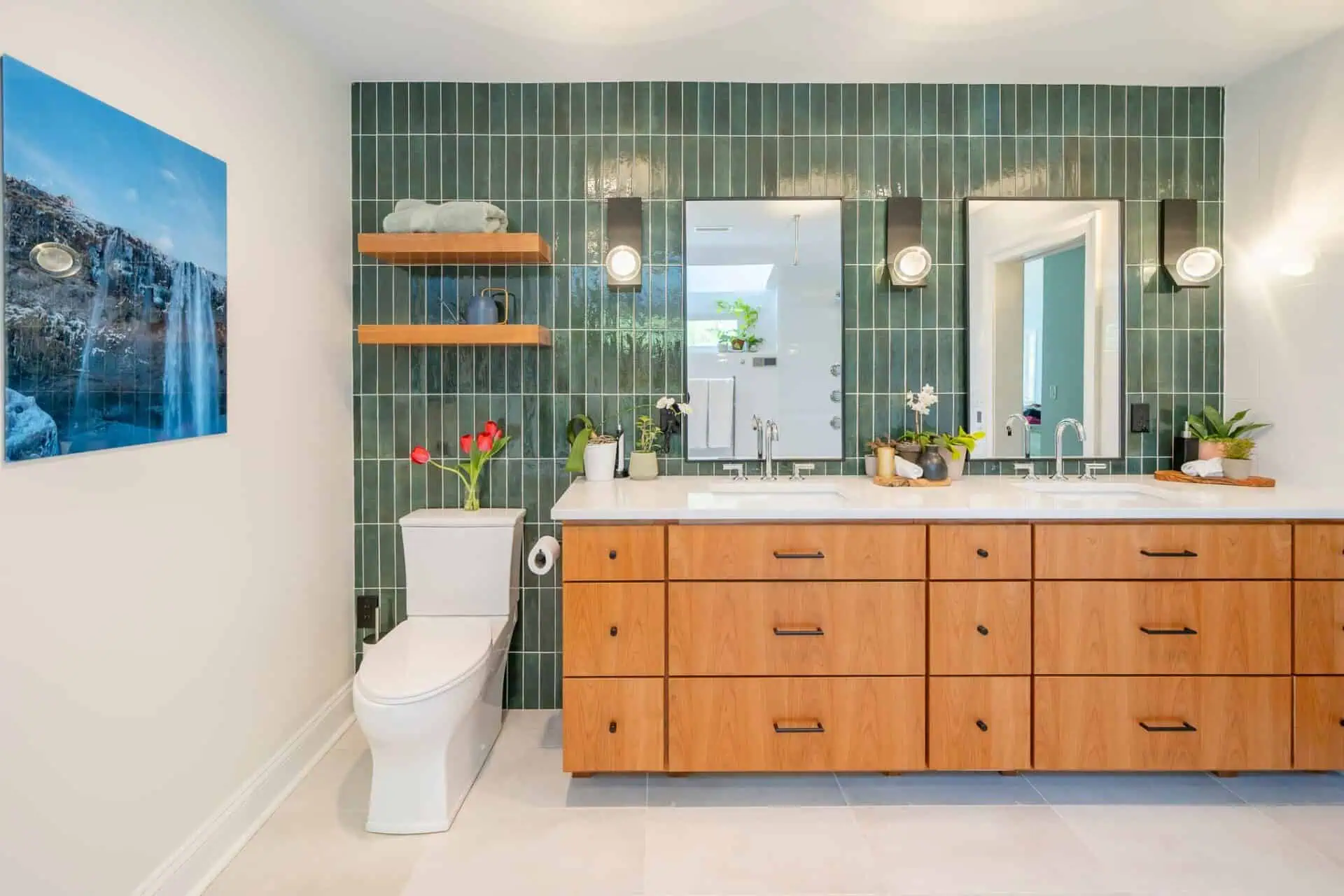
Solid wood isn’t the only option for a bathroom vanity, and it’s certainly not the most common. A vanity with wood veneer can achieve a similar look while utilizing a base layer that is less absorbent than solid wood. Hybrid approaches, that incorporate veneer boxes with solid-wood-panel doors are another option to consider. In a moisture-laden bathroom, absorption can cause wood to expand and contract. Engineered wood offers much of the visual appeal without having to worry about humidity.
Veneer and engineered wood tend to be more affordable than solid wood, but that also comes with tradeoffs. They don’t feature the same level of craftsmanship, and you lose the ability to restain or refinish the vanity for a new style or for longer durability.
Reclaimed wood is another alternative to typical solid wood. It involves wood that has usually been salvaged from old buildings and repurposed to make new furniture. It won’t look brand new, but that’s part of the point. Reclaimed wood has its own personality that may fit with your individual style.
Materials, Woods, and Finishes
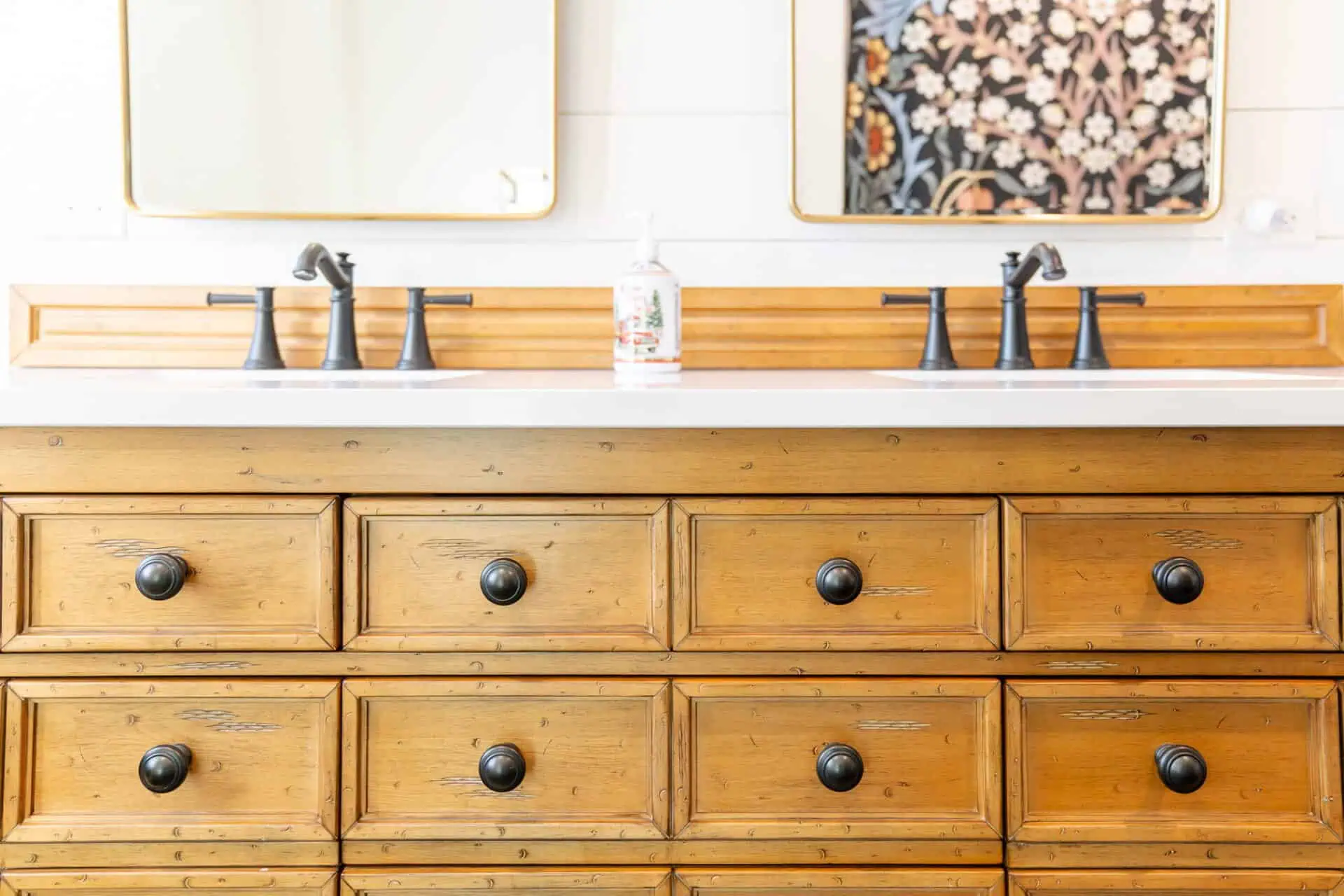
As you consider different wood vanities, it’s worth keeping an eye on the type of wood and its finish, which are two key factors that drive both aesthetics and functionality.
Best Woods for Bathroom Vanities
Every type of wood has its own character with benefits and drawbacks. Some of the most popular options for bathroom vanities include:
- White oak: This is a dense and durable wood with a striking open grain. White oak is more water-resistant than red oak and is often found in modern designs.
- Walnut: Designers often describe walnut as having rich chocolate tones that get lighter over time. It tends to be best suited in bathrooms with good ventilation or less humidity (e.g., a powder room without a shower).
- Teak: Teak is often preferred for its moisture resistance, especially in high-humidity bathrooms. Its look is neutral enough to fit with most design styles.
Water-Resistant Finishes for Bathroom Vanity Wood
In addition to the type of wood, you’ll also want to think about finishes that can enhance the vanity’s durability.
- Oil-modified polyurethane: This type of finish helps protect the wood while maintaining a warm look and feel.
- Marine-grade varnish: As the name implies, marine-grade varnish fends off moisture, making it a higher-performance choice for bathrooms with excess humidity.
- Penetrating oils: Oils like tung or hardwax create a matte finish that’s easy to repair, but you’ll have to reapply them more often.
There’s no one-size-fits-all option, and an interior designer can review the pros and cons of these options with you when choosing a vanity and determining how it will fit in your overall bathroom design.
Practical Considerations: Durability and Maintenance
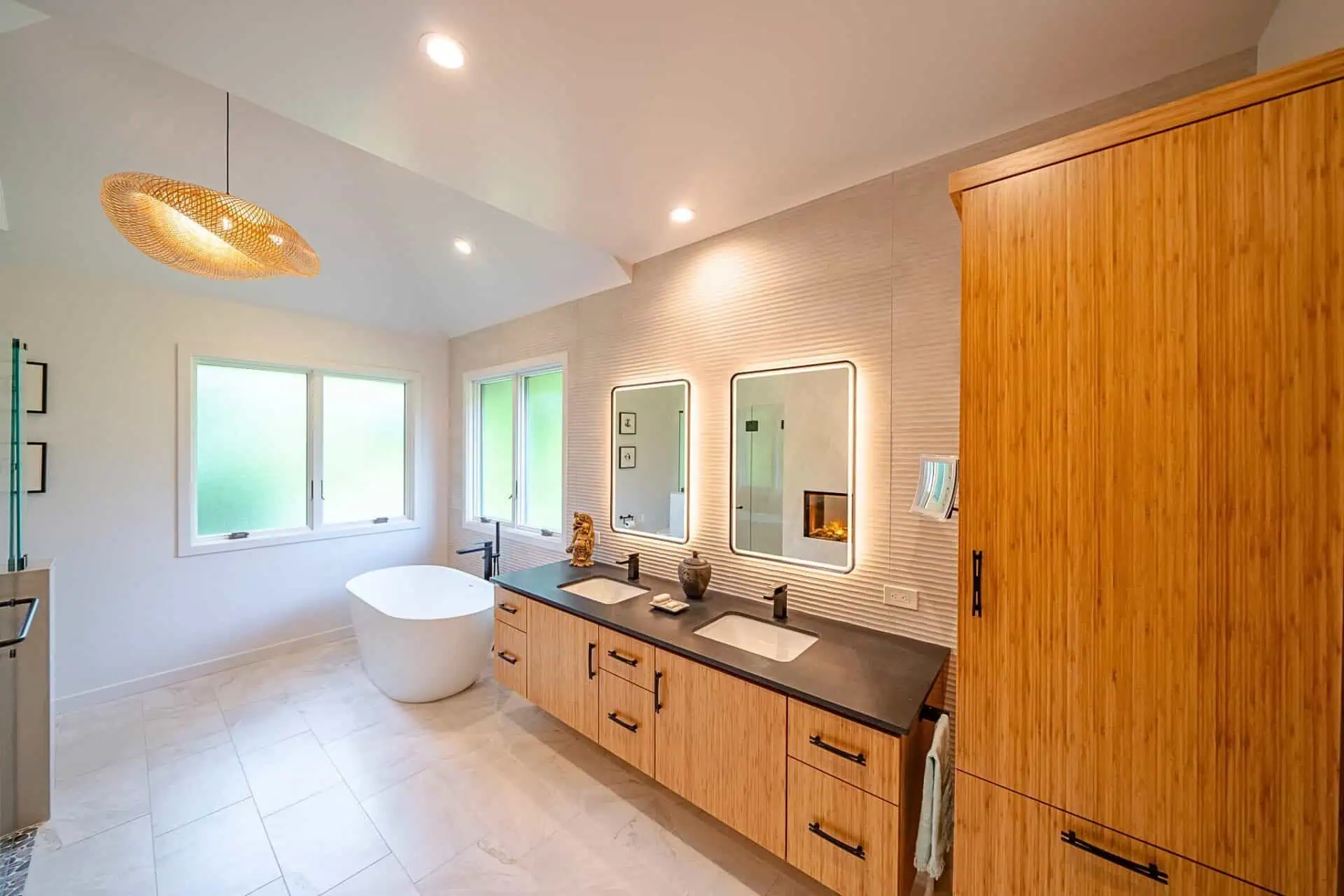
A wood vanity will age with much more grace if it’s properly cared for. That starts with sealing, which should cover all exposed edges (including the underside and back). Unsealed end-grain can be the genesis of moisture damage, and a little bit of prevention can save you significant time and money.
Over time, you want to have a regular schedule for freshening up your vanity. That may range from once a year to every five to ten years, depending on the finish.
Finally, ventilation is hugely important. If there’s nowhere for steam to escape, the odds are much higher that moisture will work its way into your vanity. Plan ahead for proper ventilation, including a right-sized exhaust fan. We like to install fans with a timer so that it’s easy to set and forget, allowing you to easily establish the habit of running the fan during and after your shower.
Common Questions About Wood Bathroom Vanities
Is solid wood suitable for bathrooms?
Although some conventional wisdom will tell you otherwise, solid wood can hold up beautifully in a bathroom if you choose the right wood, seal it properly, and have adequate ventilation. We regularly see wood vanities lasting decades.
What is the standard bathroom vanity height?
The traditional standard for a bathroom vanity is a 32″ height, but a “comfort height” of 36″ has become common in custom builds. One benefit of working with a custom remodeler is that you can align the height and depth of the vanity to suit your needs.
Do wood vanities include countertops?
Wood vanities are often designed to be paired with a separate countertop, which may be made of stone, tile, or another material. Wood or veneer countertops can work, too, although our design team often finds that a touch of contrast in the materials can be a real boost for the overall look of the bathroom.
In the end, if you choose a custom, solid wood vanity, you won’t be locked into a specific countertop. Instead, you can consider different options to find what best matches your vision.
Architect-Led Design for Your Custom Bathroom Remodel
The vanity is just one of dozens of design choices that go into a bathroom remodel. For the best result, each choice should fit into a cohesive plan to upgrade the bathroom to meet your preferences and requirements.
Hazley Builders is a design-build firm that has been serving the West Chester and Chester County region for nearly three decades. Our family has been rooted here for generations, and we take pride in helping our neighbors design and construct their dream homes.
Custom remodeling is our specialty, and we handle every step of the project under one contract and with one point of contact. We have a certified architect on staff, which gives us the expertise to excel in even the most complex remodeling projects.
If you’re hoping to upgrade your home, we invite you to get in touch and schedule a consultation.